

NIKE
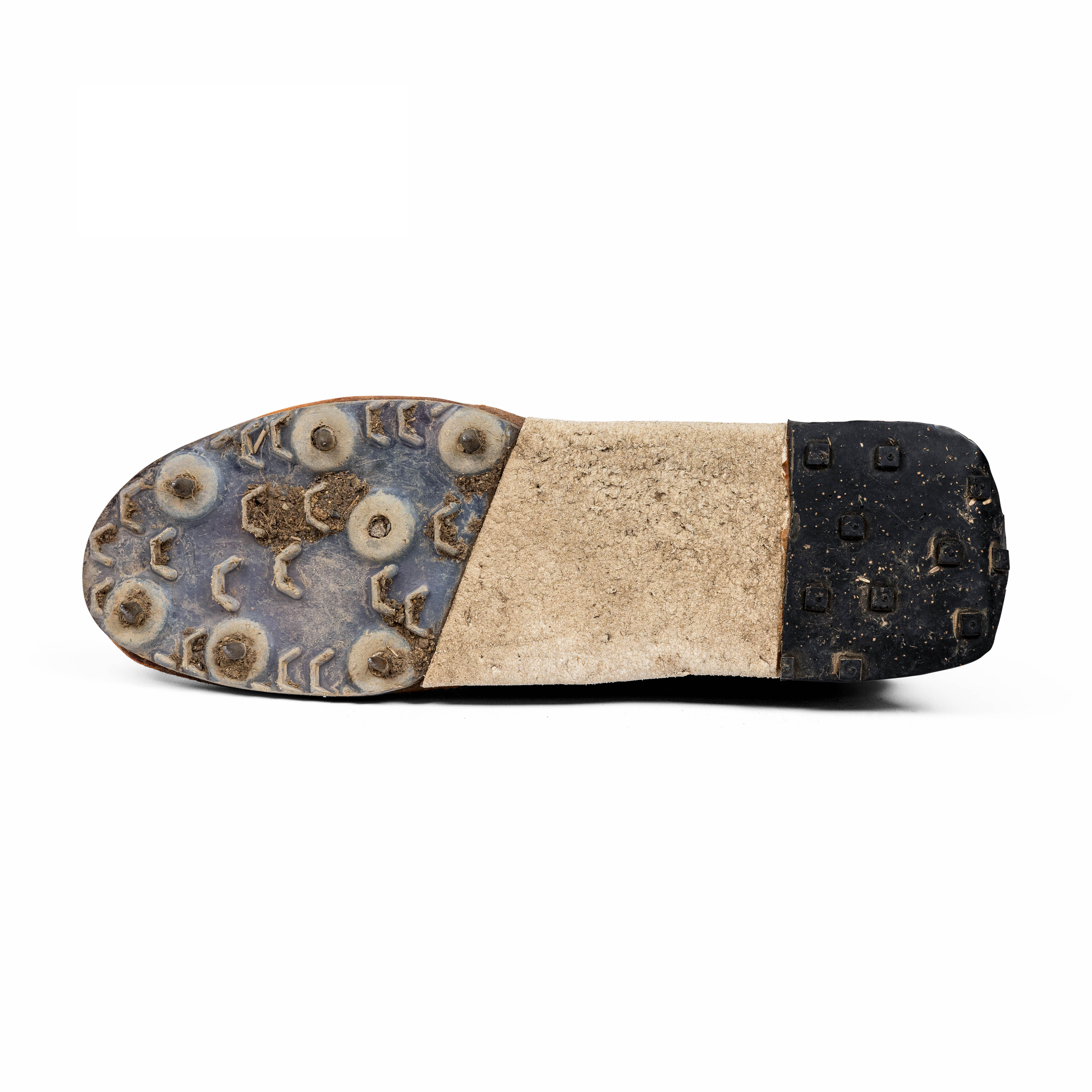
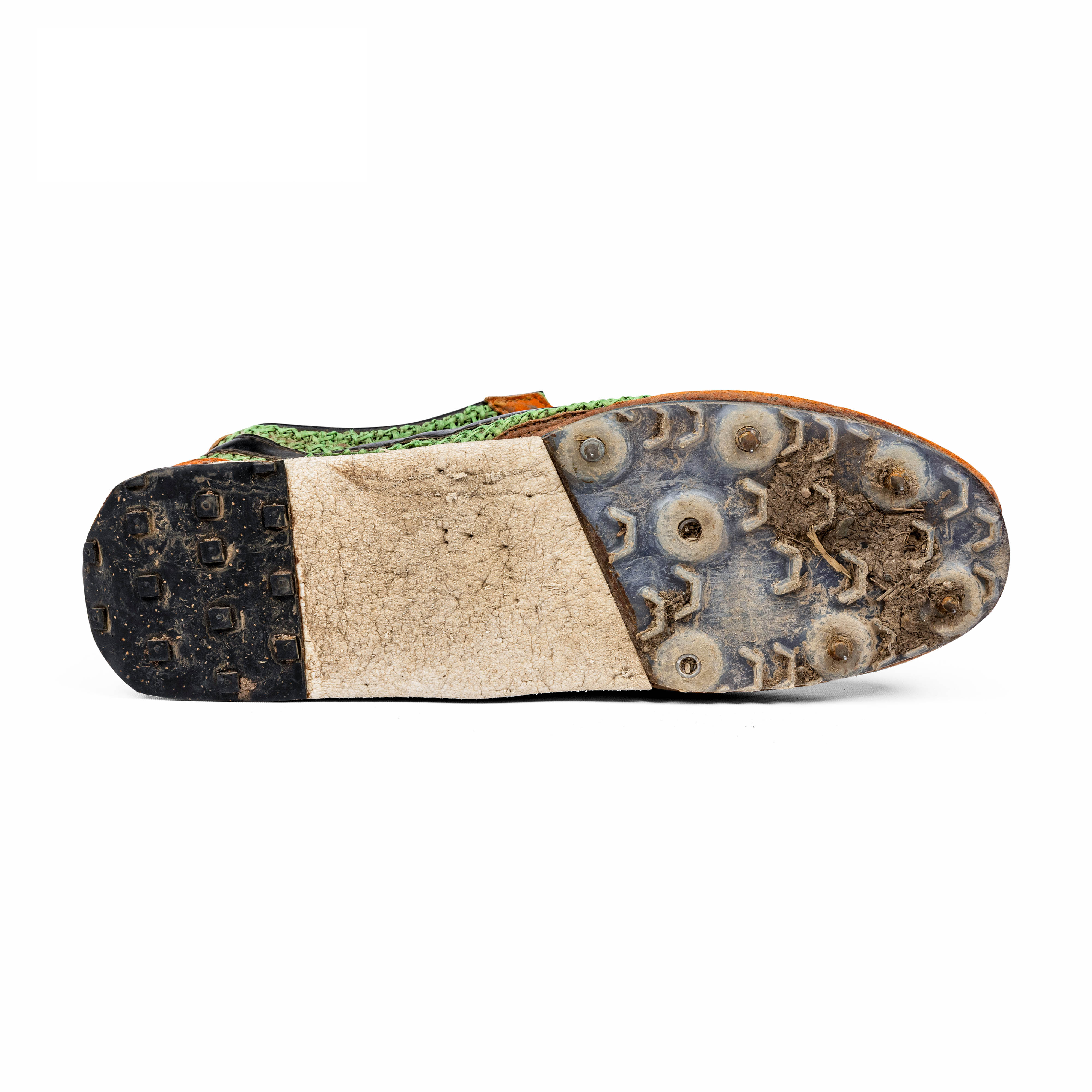
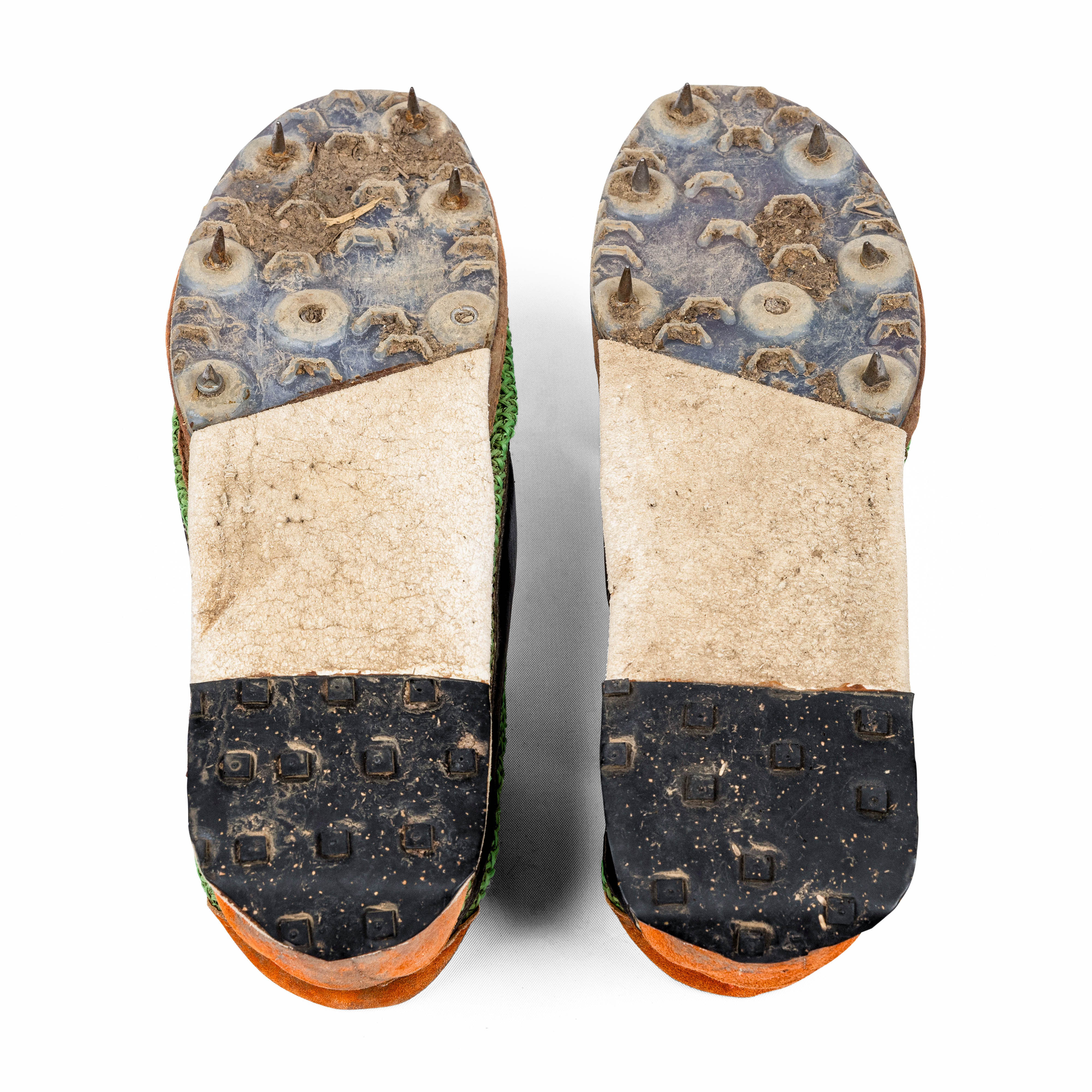
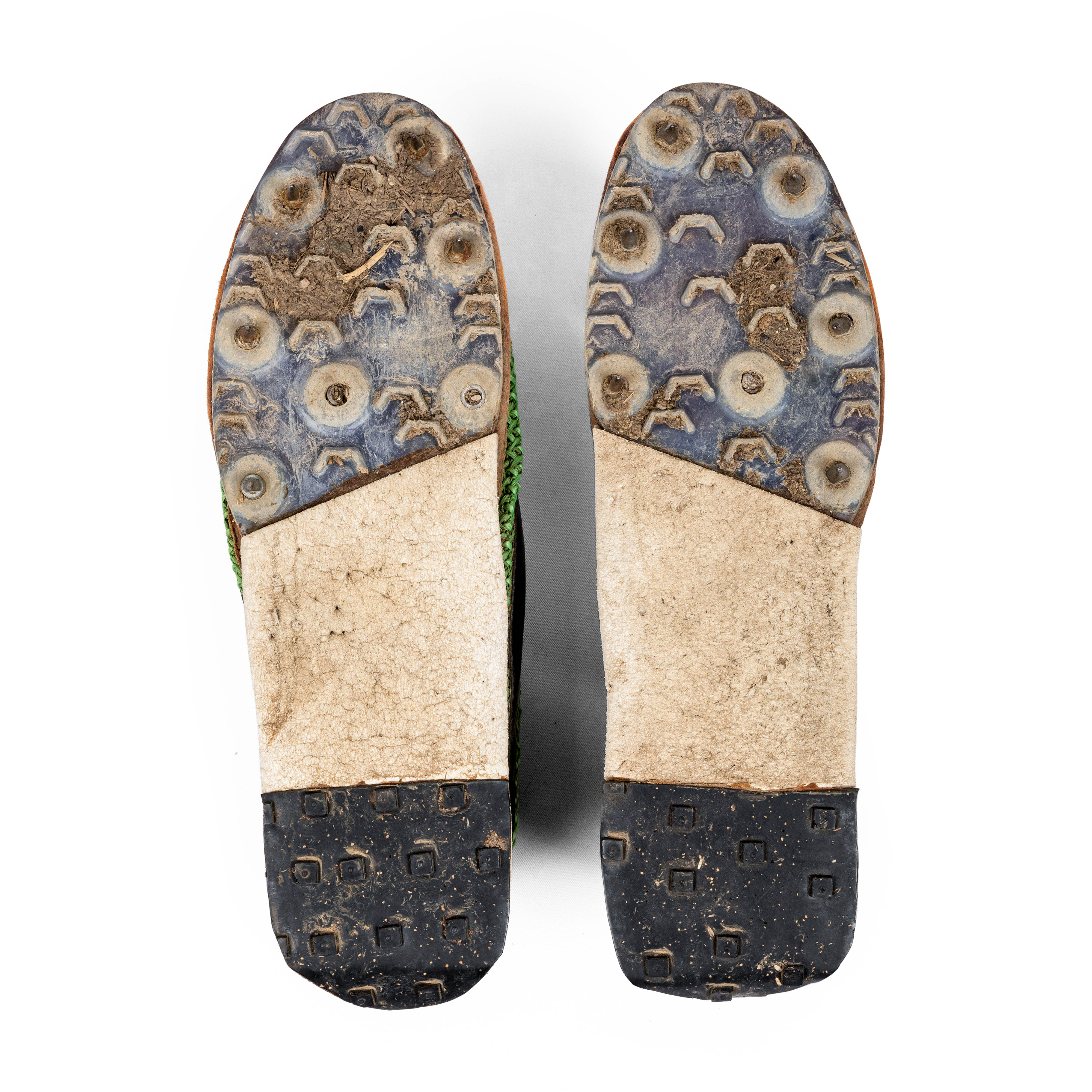
Hailu Ebba Worn Bill Bowerman Handmade Waffle Spikes
Estimate
USD $10,000 - 15,000
Closed
Apr 30, 5:02pm UTC
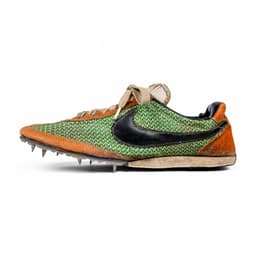
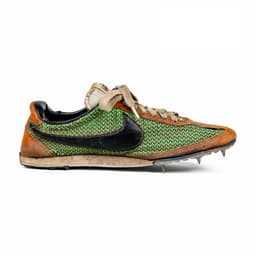
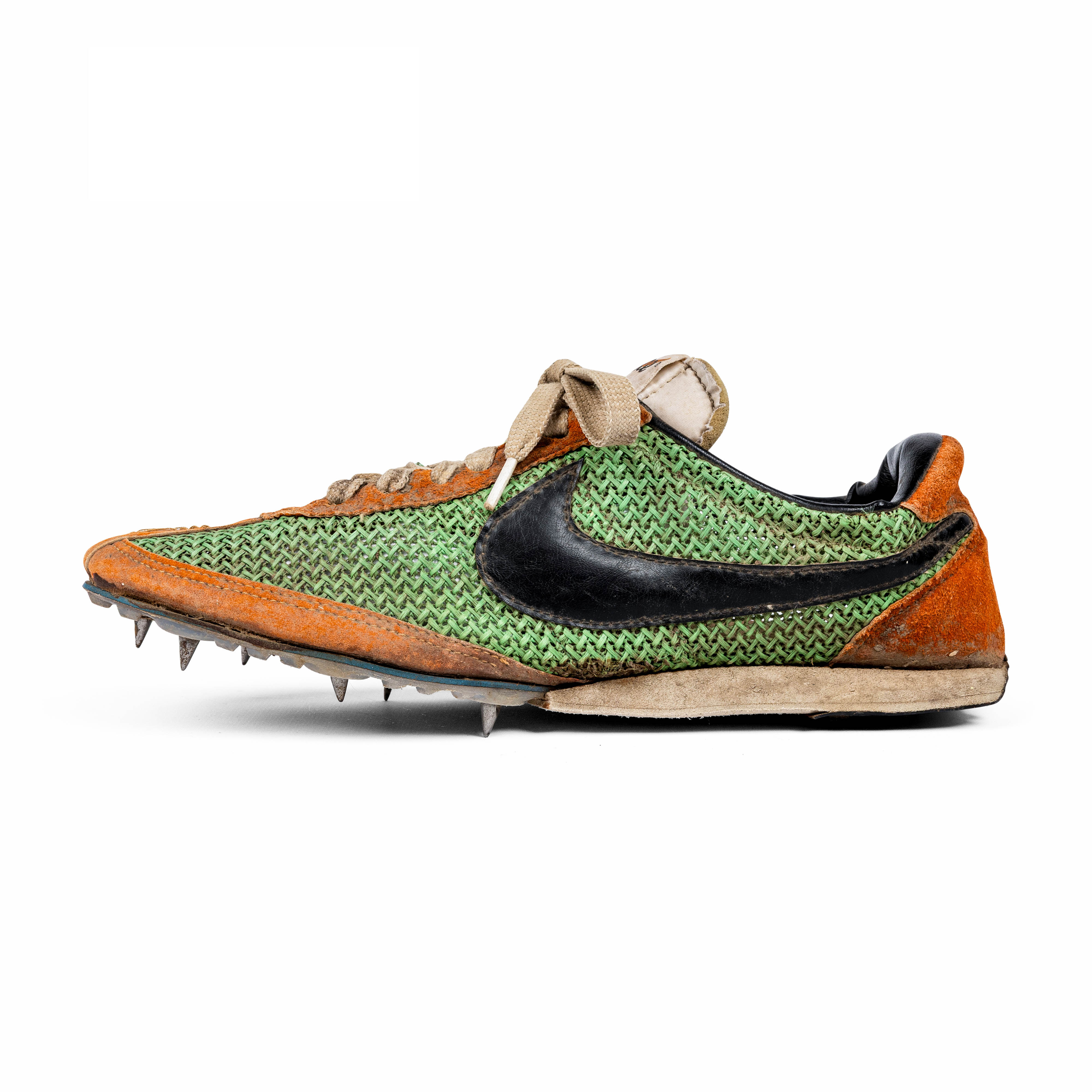
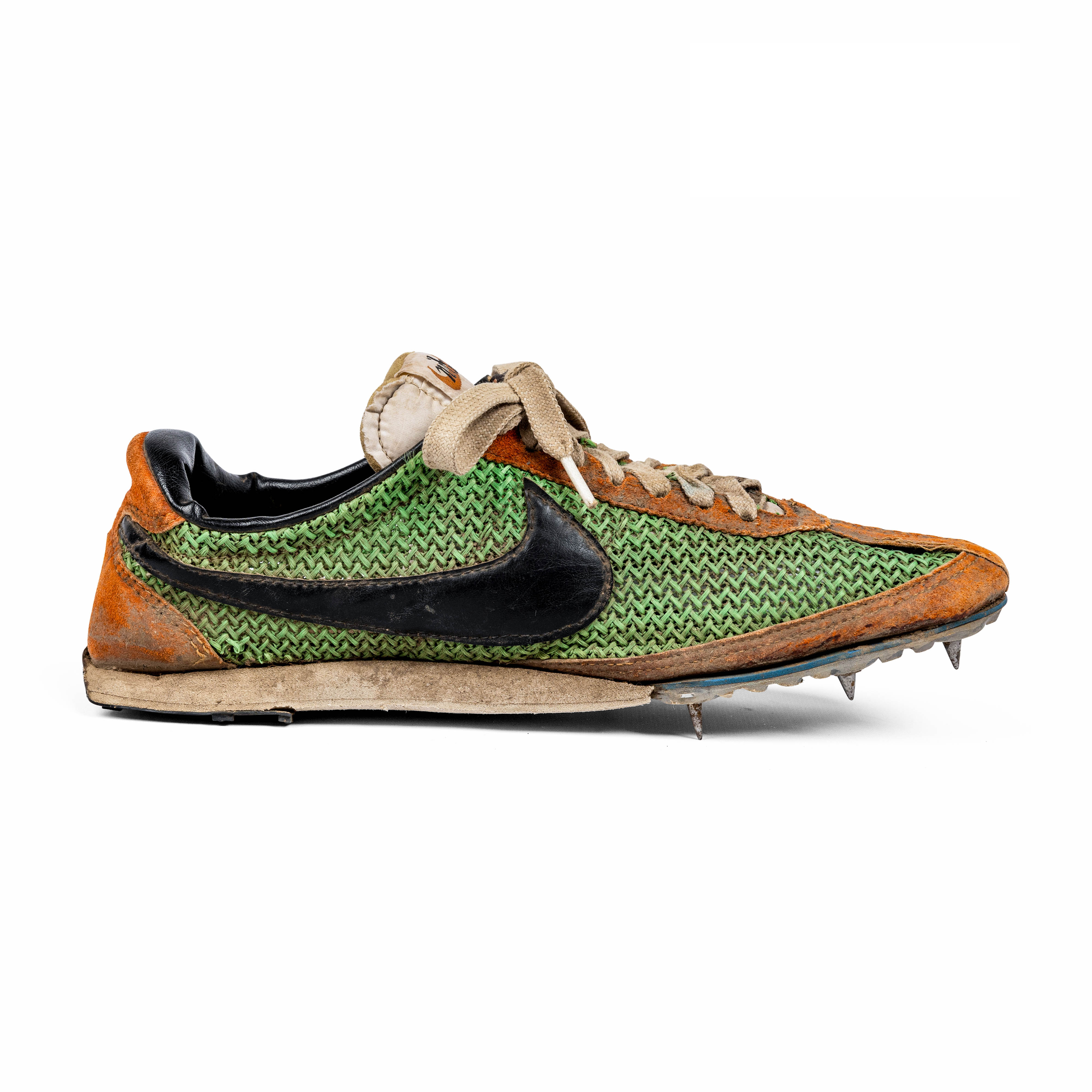
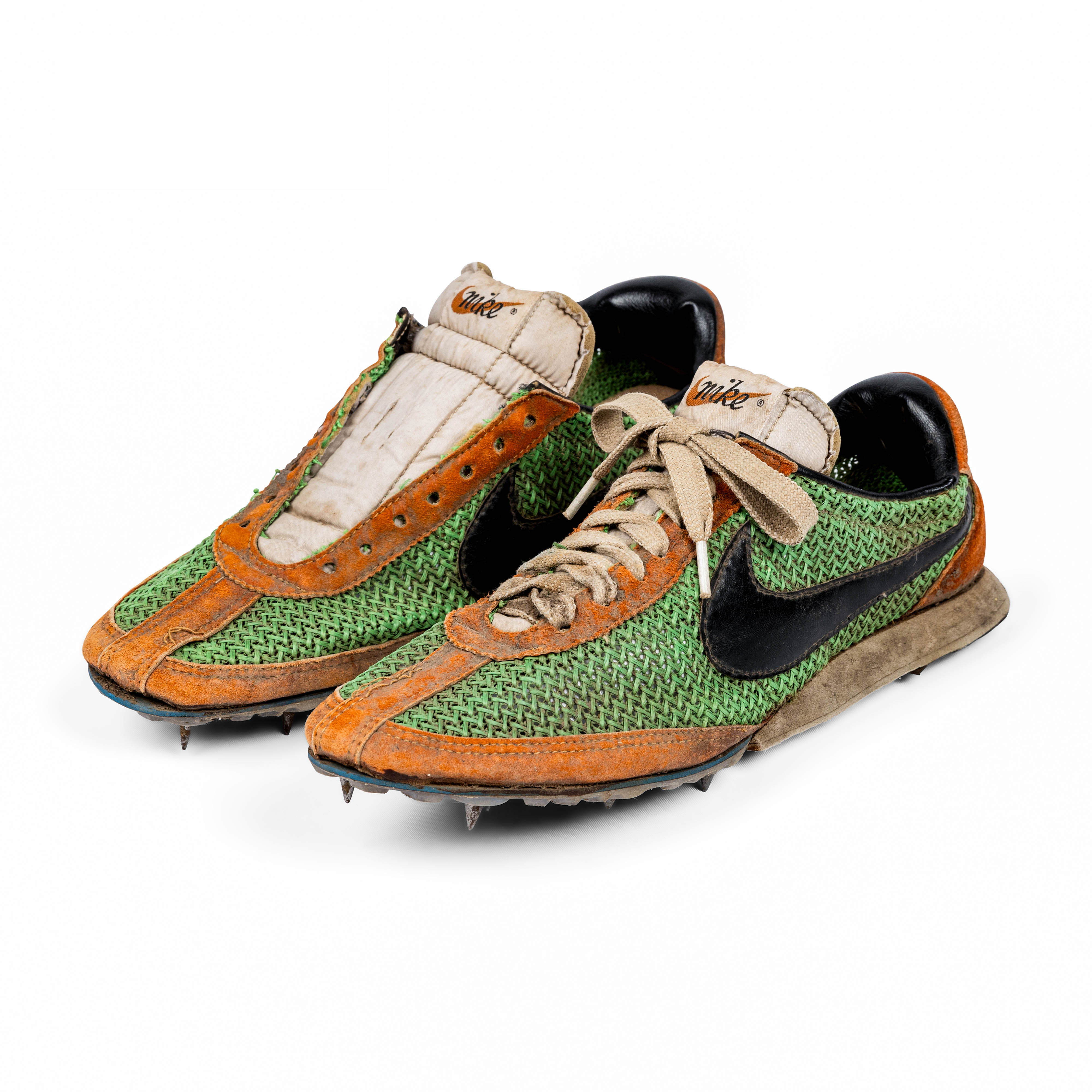
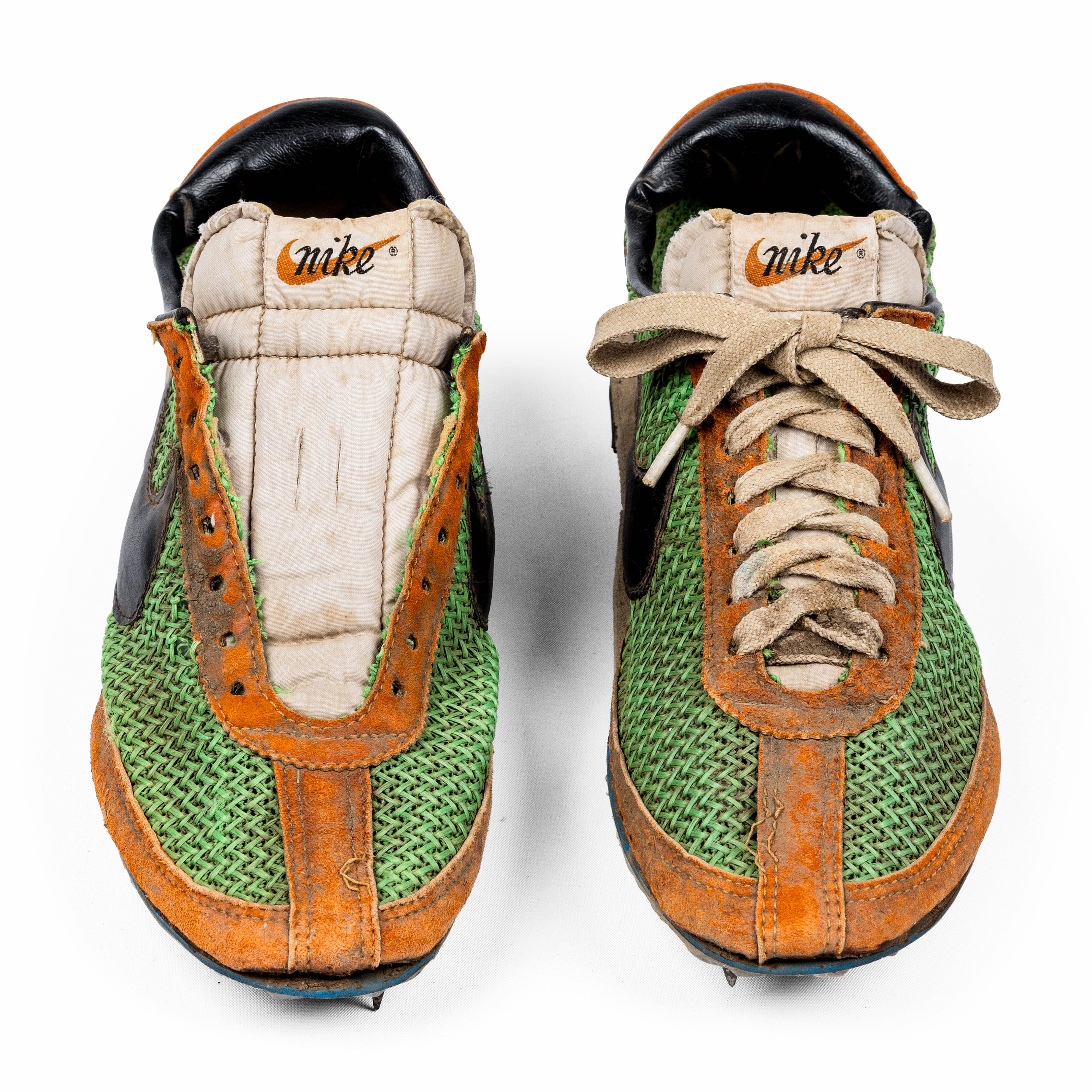
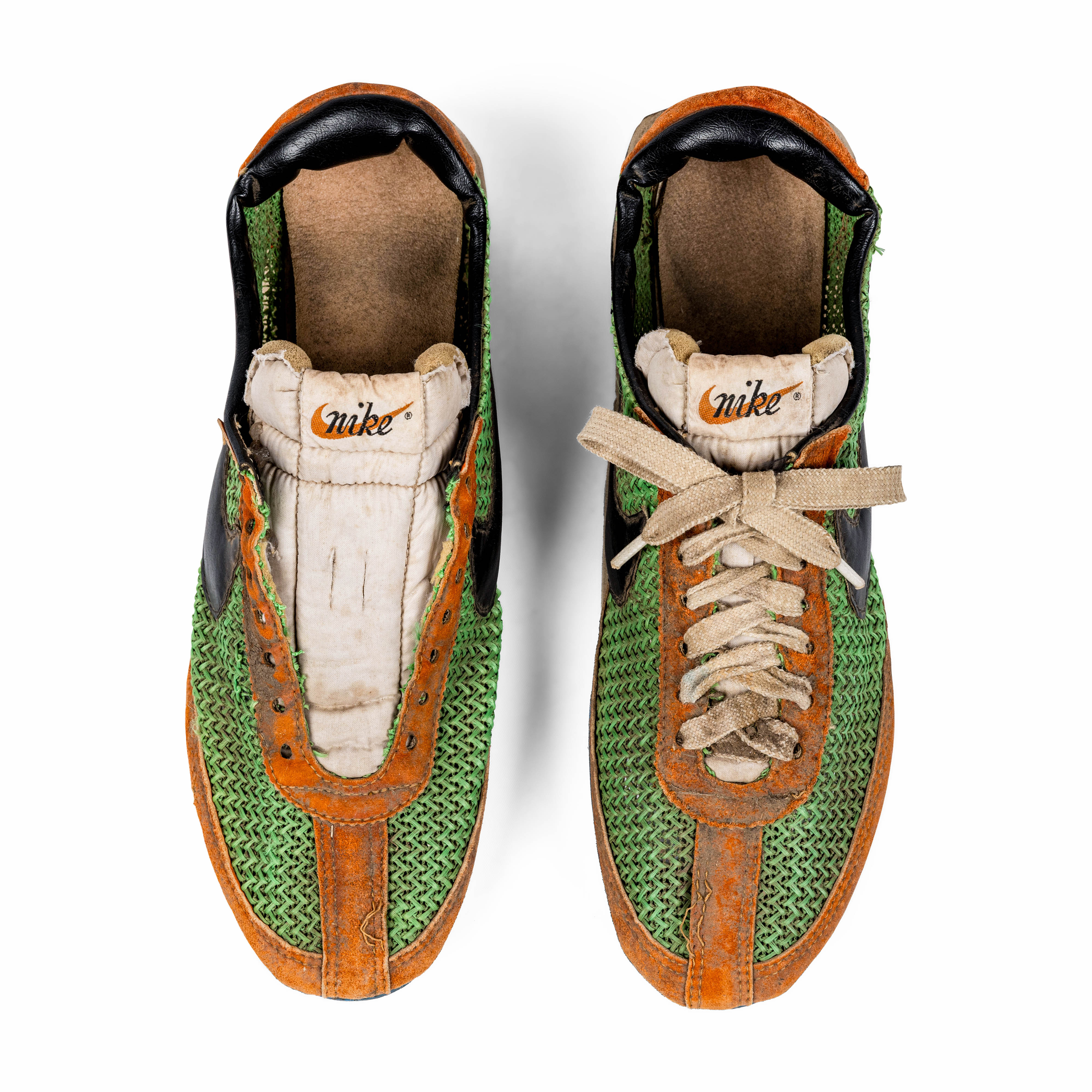
An extraordinary and deeply rare artifact from the earliest days of Nike, these vintage handmade waffle spikes were personally crafted by Bill Bowerman for Olympian Hailu Ebba in the 1970s. Bowerman, who coached Ebba during his time in Oregon, custom-made this pair after tracing Ebba’s feet by hand—a remarkable detail that underscores both the intimacy and innovation of early Nike craftsmanship. Those original foot tracings are preserved today at the University of Oregon.
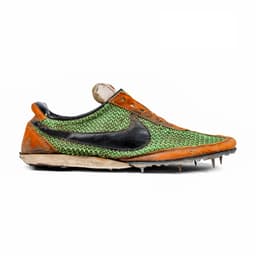
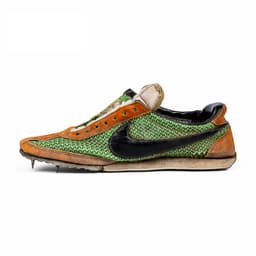
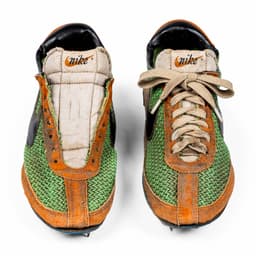
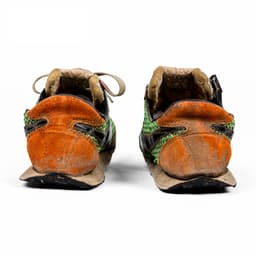
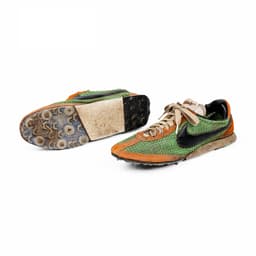
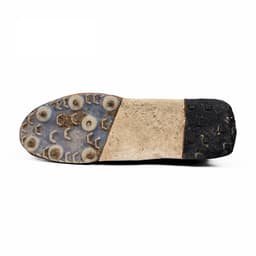
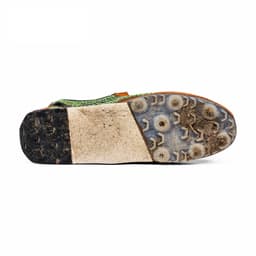
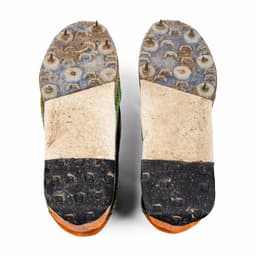
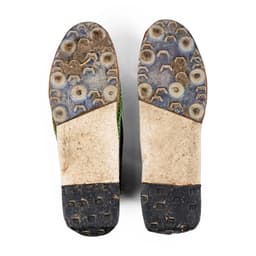
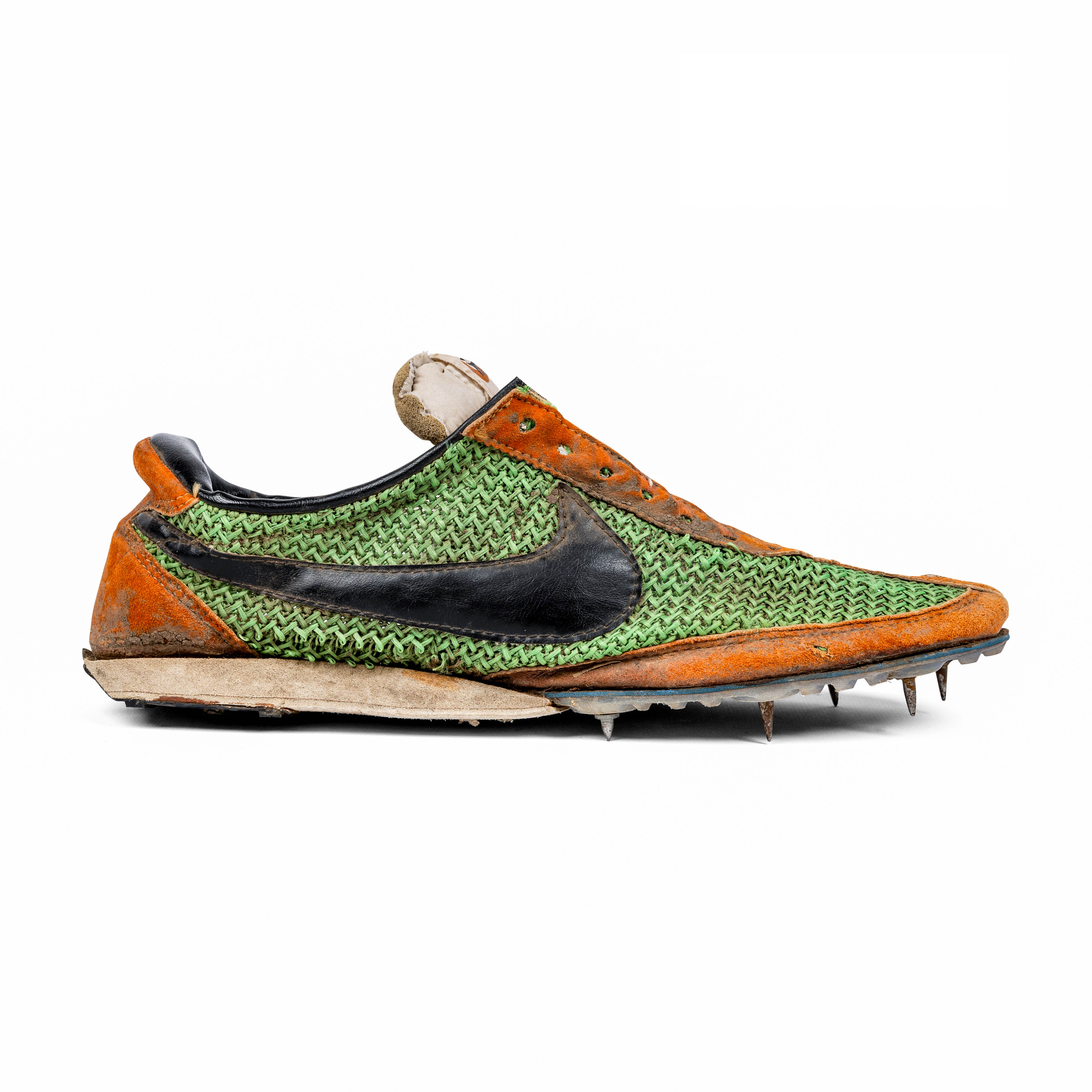
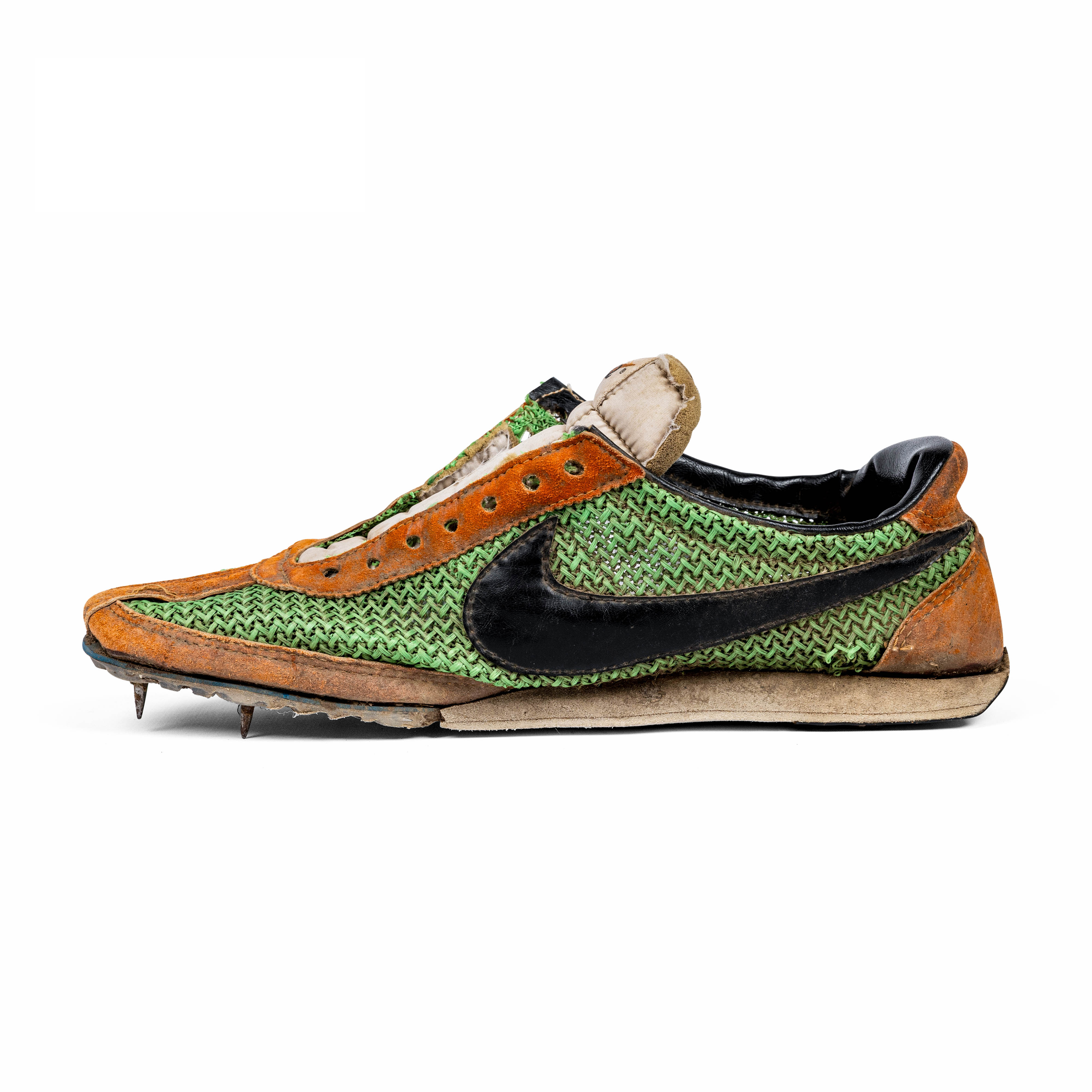
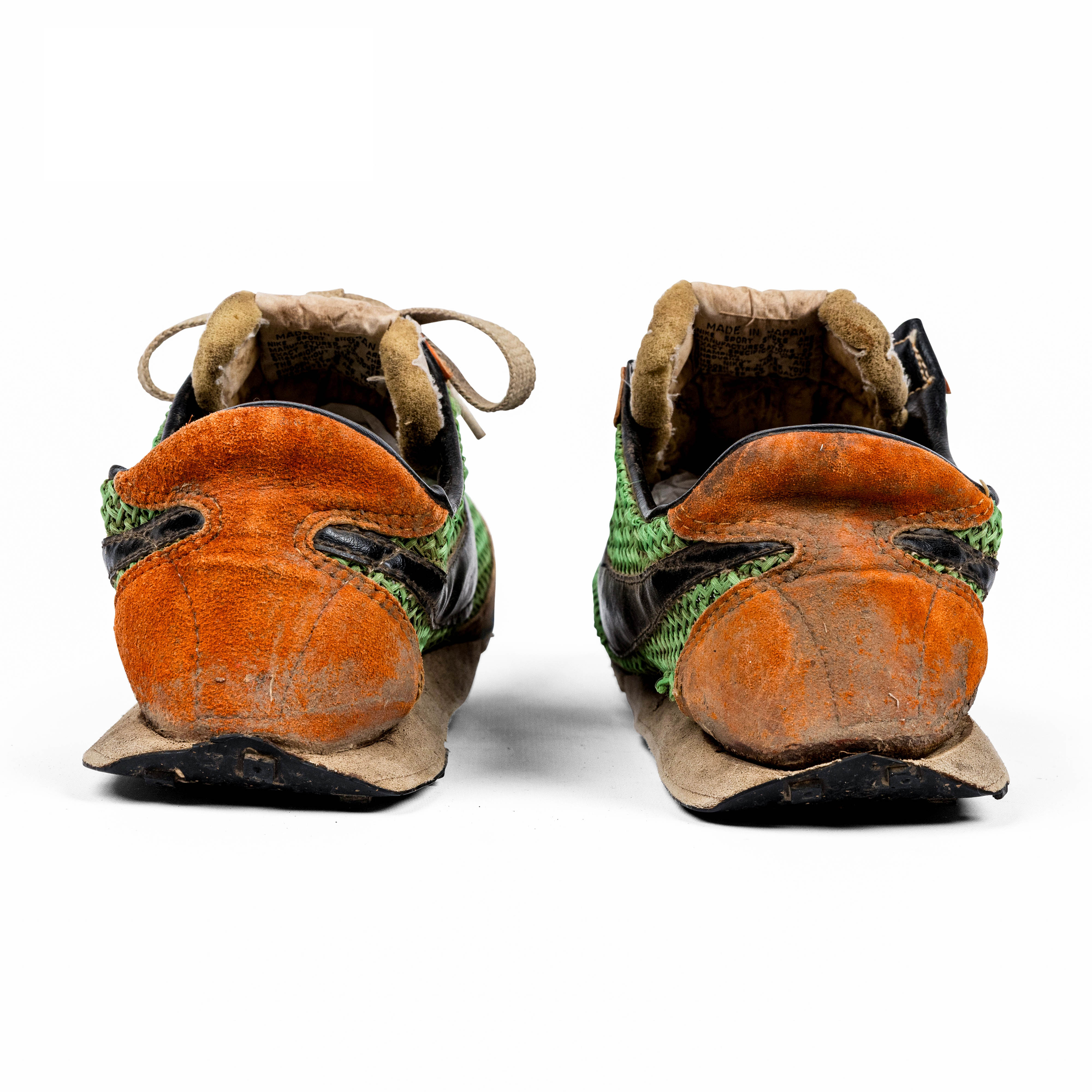
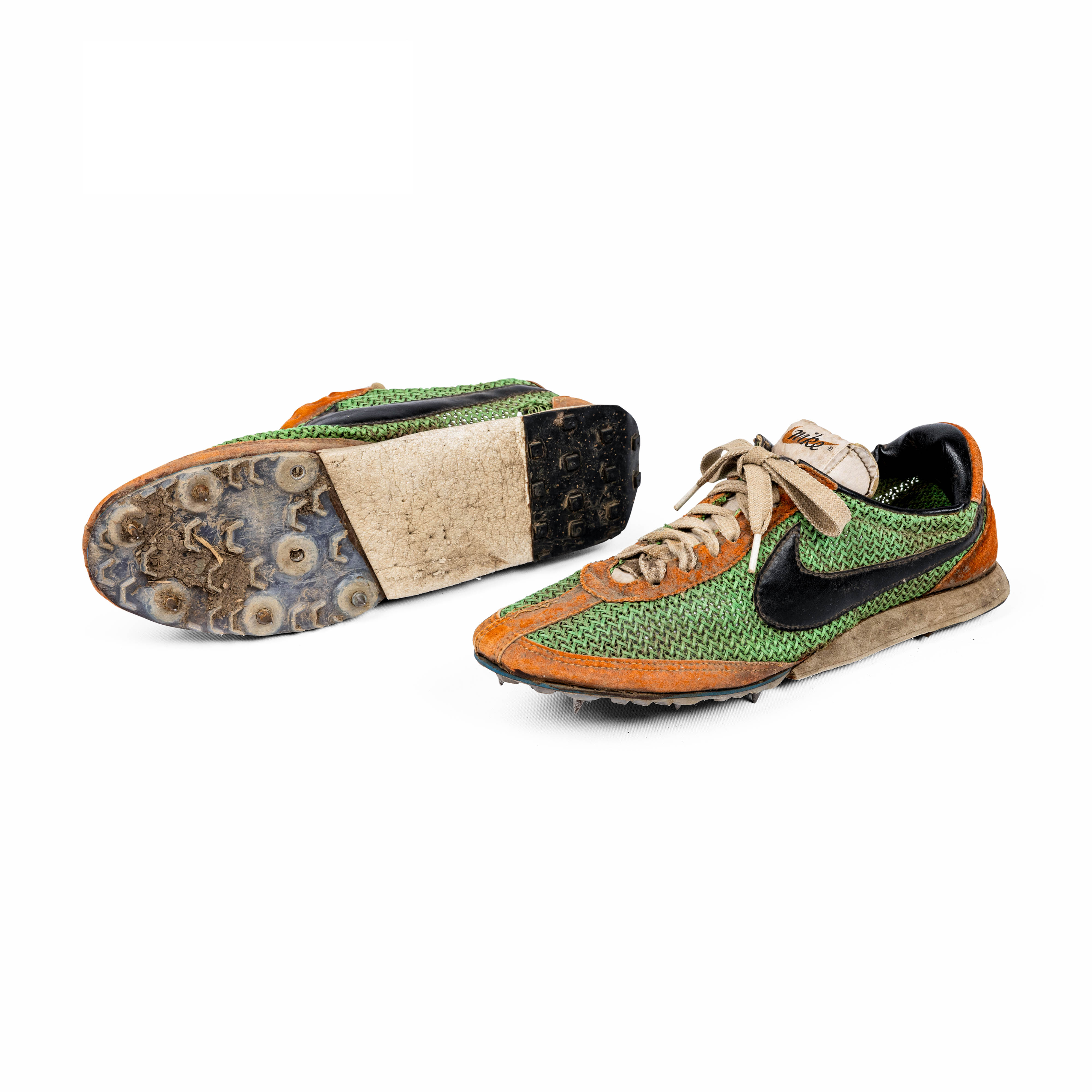
Rendered in green and orange with black Swooshes, the spikes feature lightweight mesh uppers designed for breathability and speed. The tongues retain Nike’s original lowercase cursive logo, a hallmark of the brand’s earliest production era. One shoelace is absent from the right shoe. The soles are especially significant: track spikes at the forefoot are paired with Nike’s pioneering waffle tread at the heel, representing the company’s first major technological innovation.
The waffle sole, famously conceived by Bowerman at the breakfast table while eating waffles with his wife, remains one of the most foundational design breakthroughs in sports footwear history. Bowerman was also known for retaining most of the custom spikes he made for his runners, often requesting that they be returned after competition, making surviving athlete-held examples exceptionally rare.
Ebba competed for the Ethiopian Olympic Team at the 1972 Munich Olympic Games and was set to participate again in the 1976 Montreal Olympics, before Ethiopia joined the boycott. During his collegiate years at Oregon State University, he also ran in one of the most storied races of the era: a legendary 1500-meter contest against Steve Prefontaine, widely regarded as one of Prefontaine’s finest performances. In the final 100 meters, Prefontaine swung wide to secure the victory, preventing Ebba from making his move.
These spikes carry exceptional provenance. Ebba gifted them in the mid-1970s to Joe Fulton, a fellow student at Oregon State University. Fulton preserved the shoes in his personal library for nearly fifty years before passing them to his daughter.
A singular object at the intersection of Olympic history, early Nike innovation, and the legacy of Bill Bowerman, this pair stands as a museum-worthy testament to the origins of performance footwear.


