MONTANA, USA
Three Ceratopsian Teeth
평가하다
USD $500 - 1,000
종료
Jul 1, 2:02pm UTC
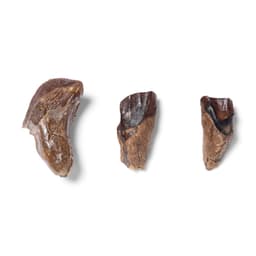
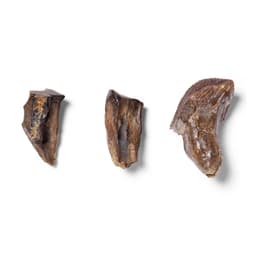
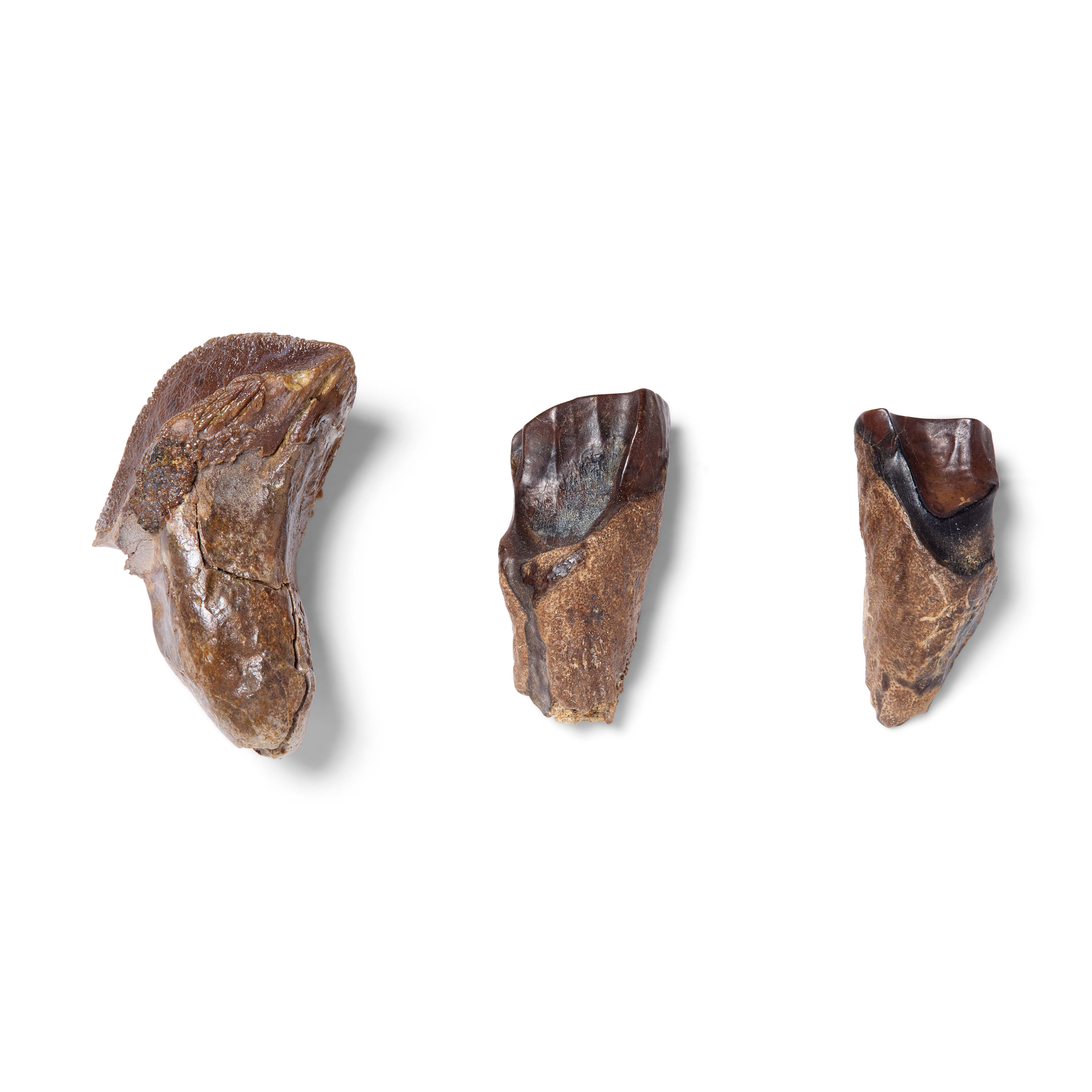
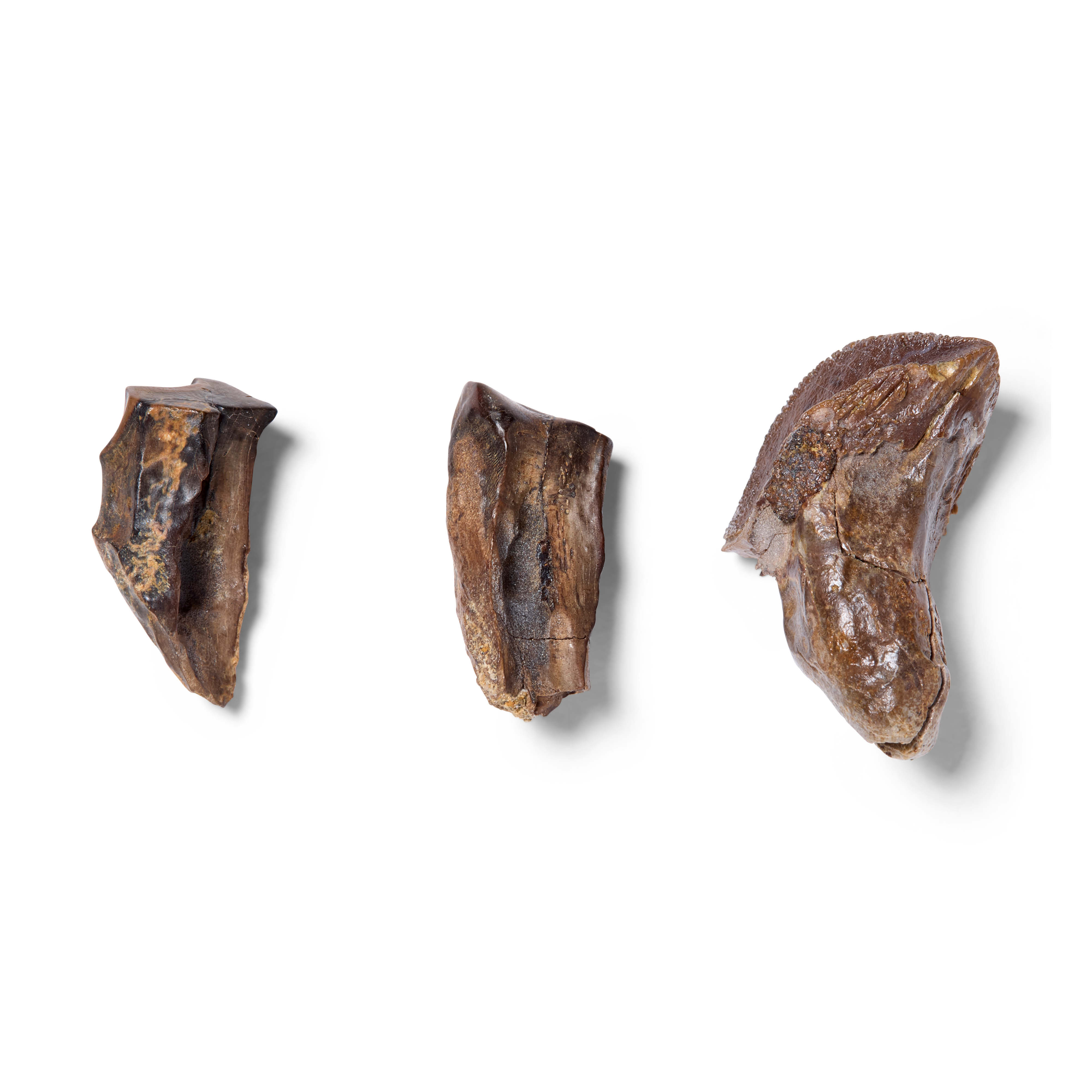
A GROUP OF THREE CERATOPSIAN TEETH, INCLUDING ONE WITH INTACT ROOT
Ceratopsia indet.
Late Cretaceous Period (approximately 76 million years ago)
Judith River Formation, Montana, USA
left to right:
1 x 1 1/4 x 11/16 inches (2.5 x 3.2 x 1.7 cm)
1/2 x 1 1/16 x 3/8 inches (1.3 x 2.7 x 1 cm)
3/8 x 1 x 5/16 inches (1 x 2.5 x 0.8 cm)
A ceratopsian is a group of herbivorous, beaked dinosaurs that lived during the Cretaceous Period. Most famous for its iconic representatives like the Triceratops, this group of dinosaurs is easily recognized by their massive heads, parrot-like beaks, and elaborate neck frills or facial horns. Ceratopsian teeth are among the most instantly recognisable elements of the dinosaur fossil record. Their robust, prismatic crowns — built around a central primary ridge framed by coarse denticles — formed a serrated cutting surface engineered for the most demanding plant-shearing work in the Cretaceous world. The long, thick roots speak to the immense pressure each tooth withstood with every closure of the jaw; in well-used teeth, the chewing surface develops a glassy, polished plane that records the precise geometry of the animal's bite.
So efficient was the ceratopsian dental battery that the group out-competed many of its herbivorous contemporaries through the Late Cretaceous. While certain dinosaur teeth (especially among the carnivorous theropods) can be identified to a species level, ceratopsian teeth are so morphologically conservative across genera that confident identification typically requires association with diagnostic skeletal material. The teeth offered here are consistent with the prominent horned dinosaurs of the Judith River fauna — including Medusaceratops, Mercuriceratops, and Spiclypeus — but cannot be referred to a single species in isolation.
The Judith River Formation has yielded some of the most diverse and visually striking ceratopsians ever found.