

MONTANA, USA
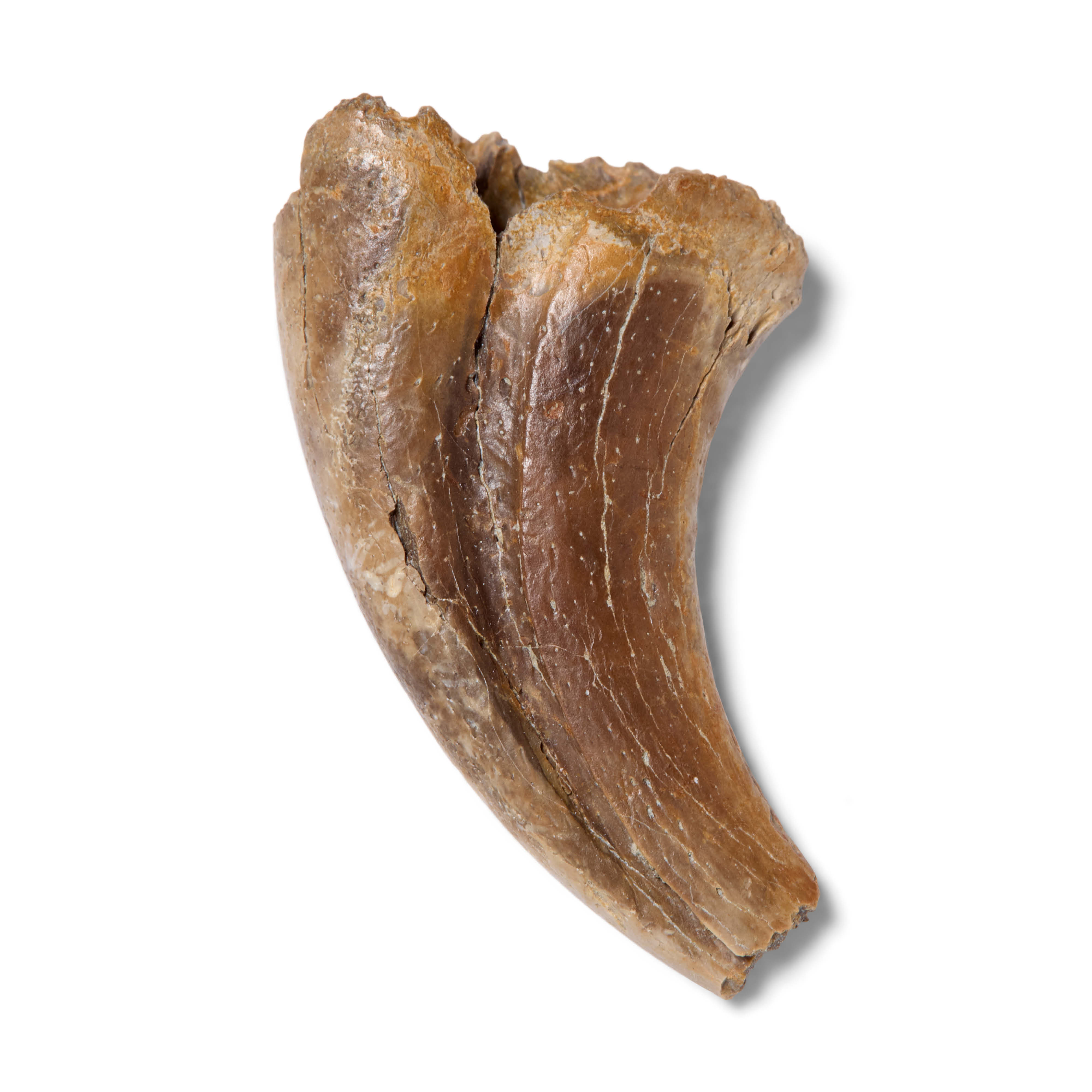
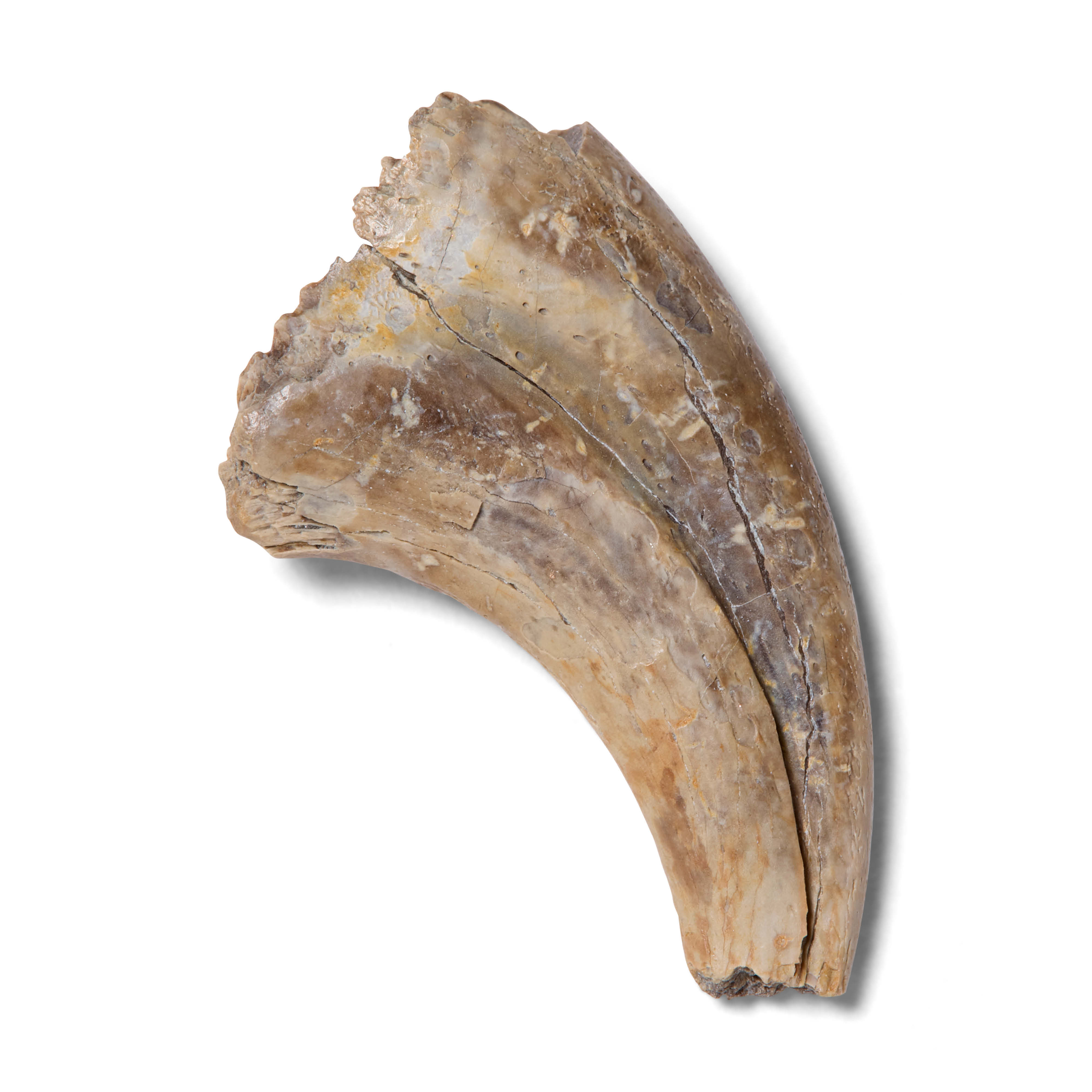
A Dromaeosaurid Hand Claw
Estimate
USD $1,500 - 2,000
Closed
Jul 1, 2:08pm UTC
A DROMAEOSAURID HAND CLAW
Dromaeosauridae indet. (cf. Dromaeosaurus sp.)
Late Cretaceous Period (approximately 76 million years ago)
Judith River Formation, Montana, USA
3/4 x 1 3/8 x 1/4 inches (1.9 x 3.5 x 0.6 cm)
Dromaeosaurids — the small, fast, feathered, sickle-clawed theropods immortilized by Jurassic Park — are among the most viscerally familiar dinosaurs in popular imagination. In the fossil record, they are among the rarest. The Judith River Formation has yielded several of the earliest members of this lineage, and the genus Dromaeosaurus itself was first named from material recovered in this Late Cretaceous floodplain system.
The defining weapon of the raptor anatomy is the recurved, blade-edged claw — both the famous sickle of the pes (foot) and, less celebrated but no less lethal, the slashing claws of the manus (hand). Raptor claws are particularly desirable for a simple reason: unlike teeth, which were shed and replaced throughout an animal's lifetime, a dromaeosaurid had only one set of claws for its entire life. Each claw recovered represents one specific moment of one specific animal — and as a result they are dramatically less common in the fossil record than even the most prized of theropod teeth.
The Judith River raptors hunted in the shadow of the apex tyrannosaurs Daspletosaurus and Gorgosaurus, but were the most agile and refined predators of their environment, built for speed, balance, and decisive killing strikes. The present claw, near-complete and very well preserved, is an exceptional example of that animal's most identifiable element — and of the rarest dinosaur family in the formation.