Lot 1


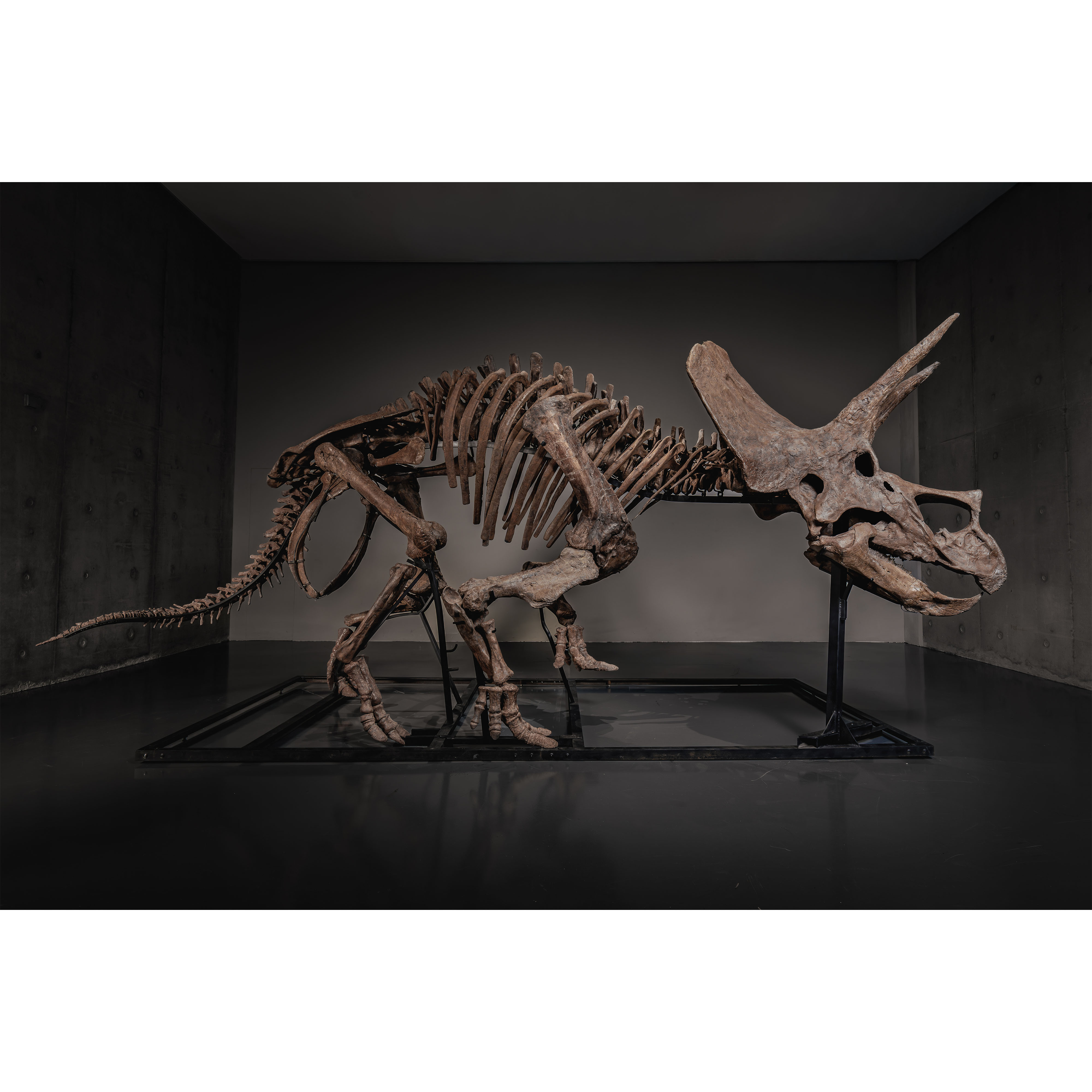
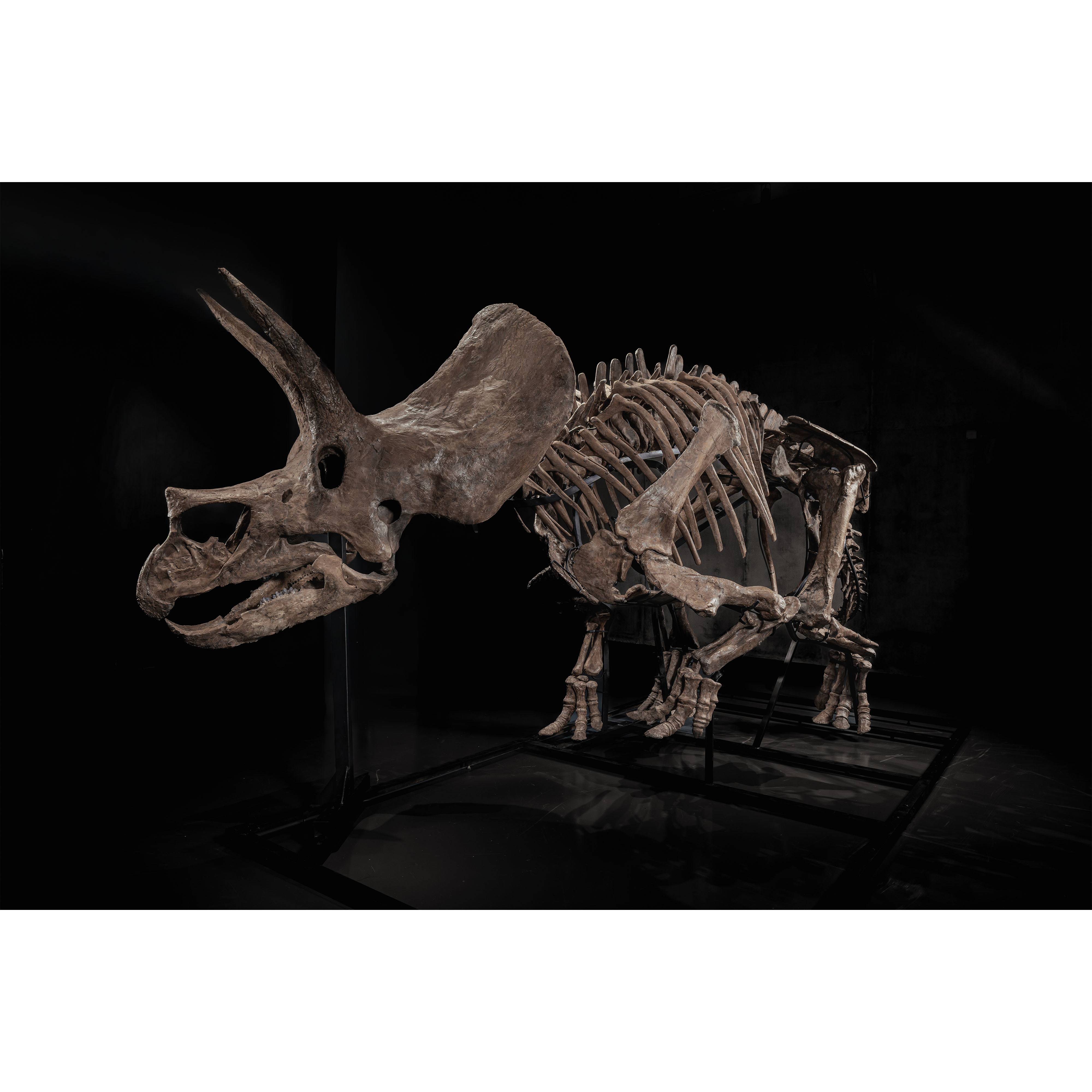
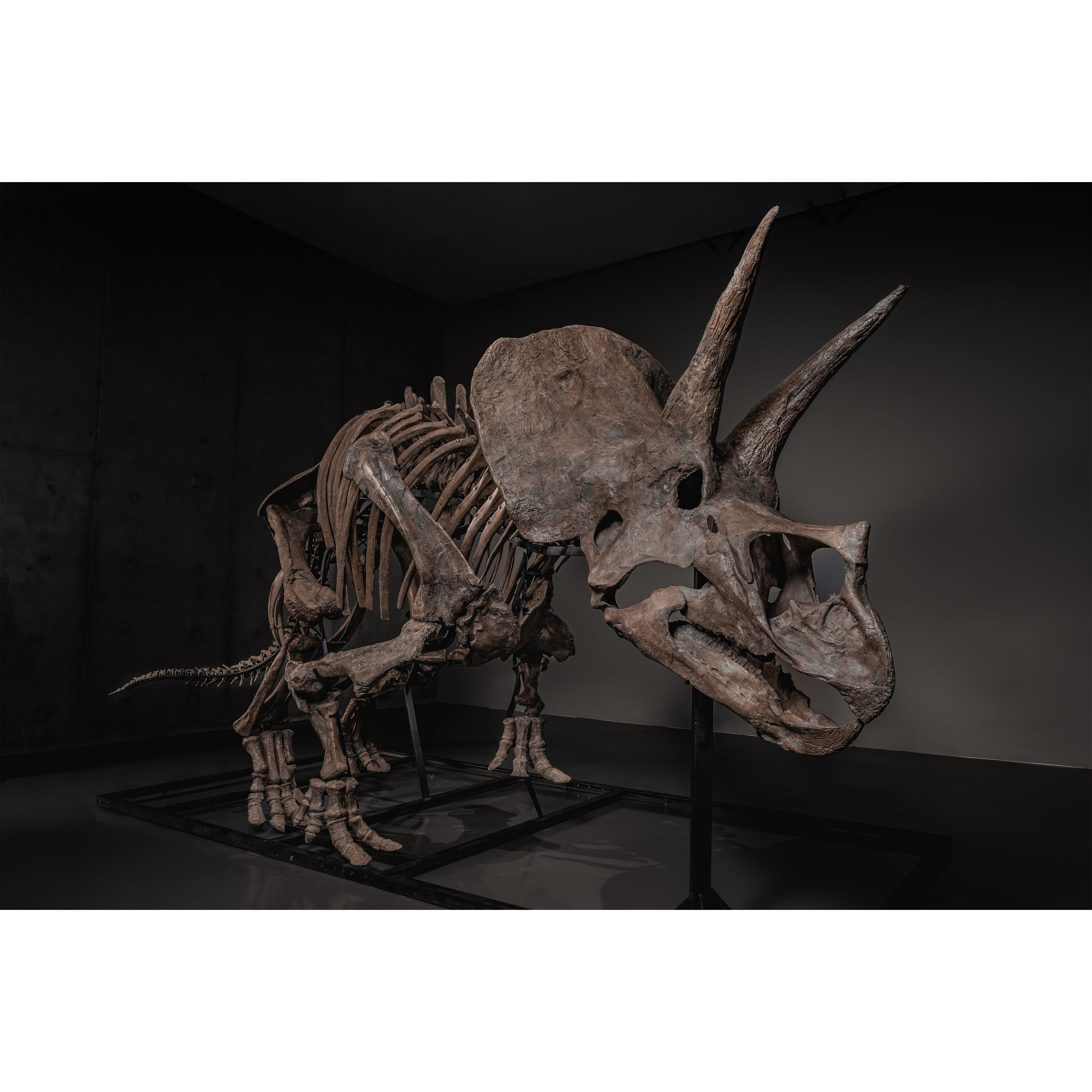
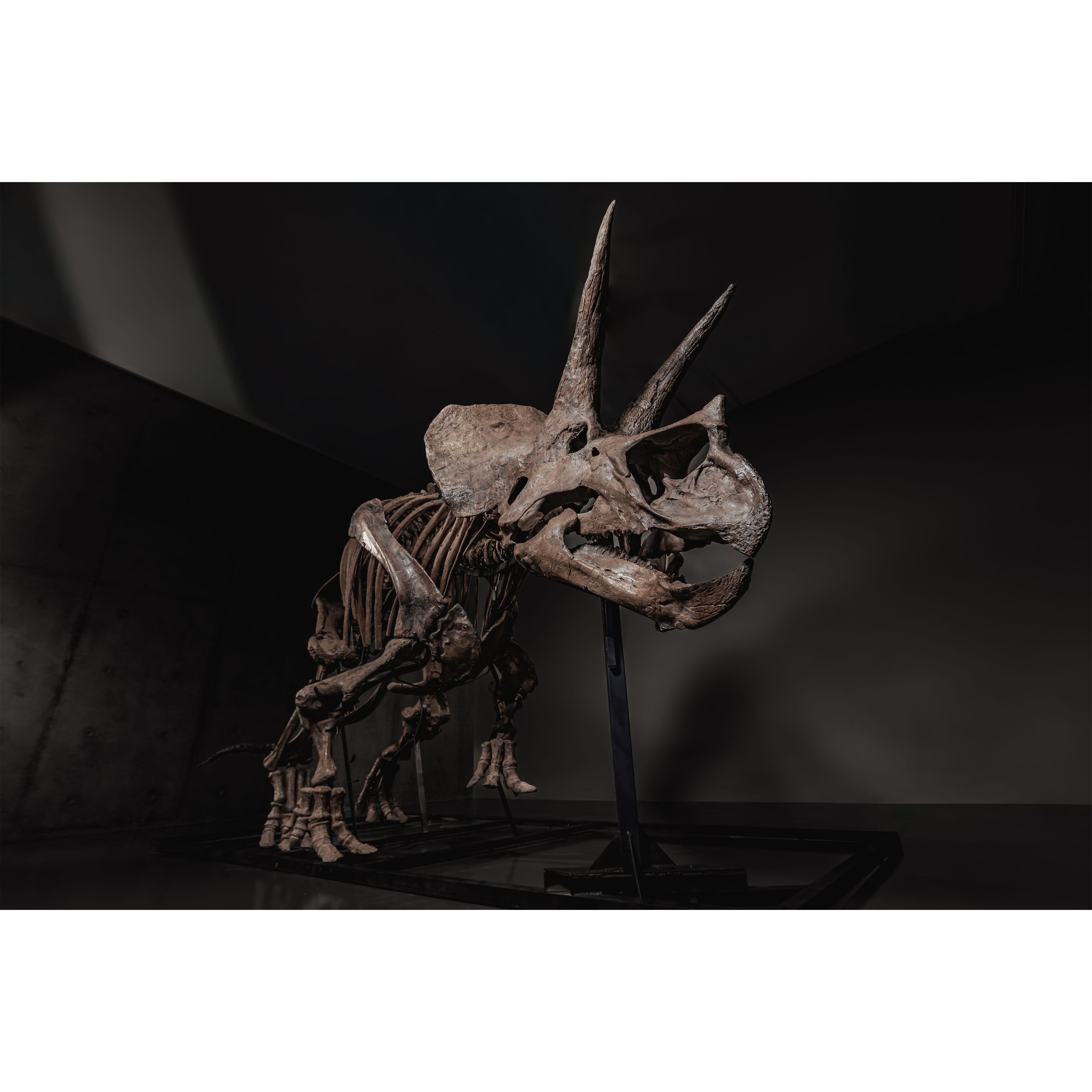
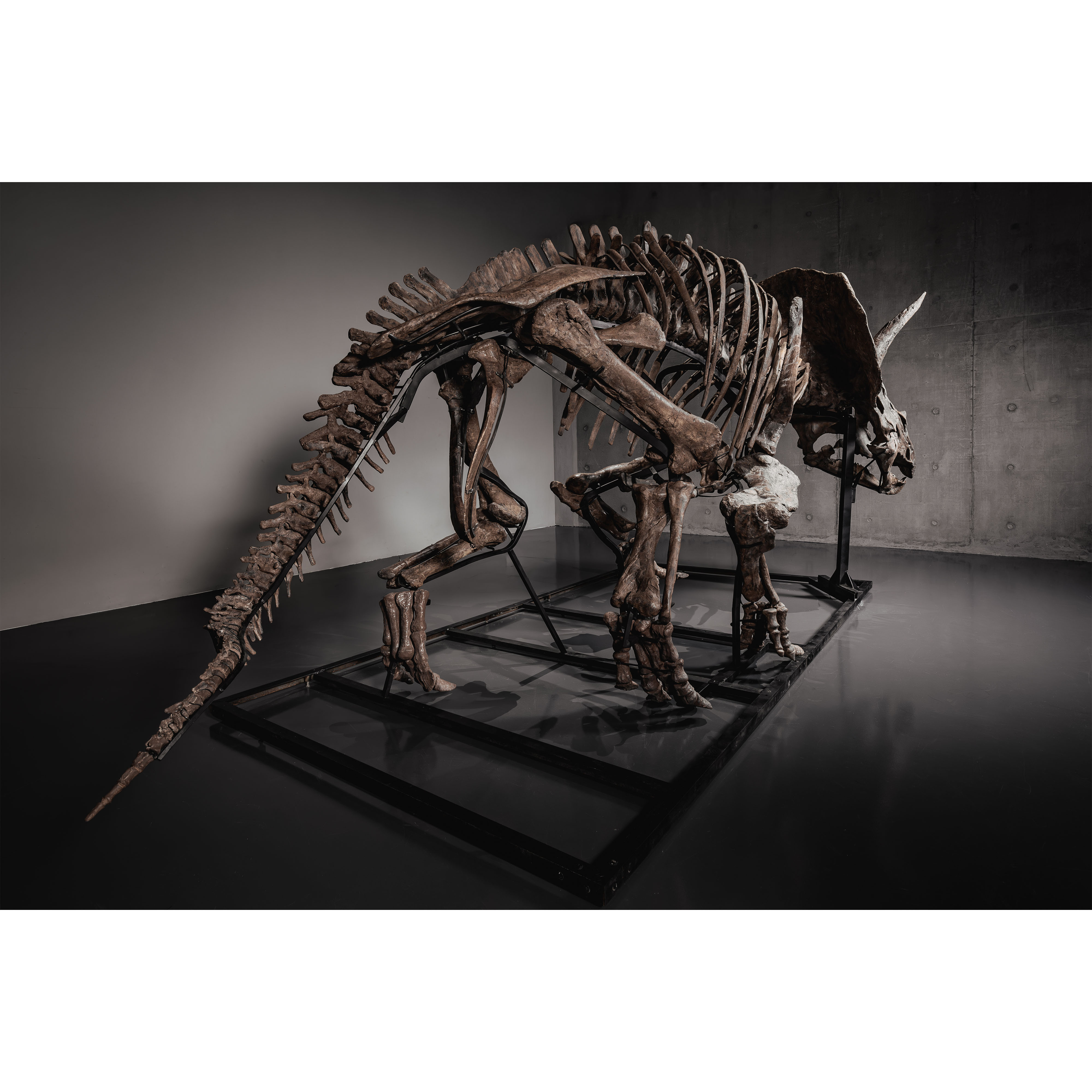
The Only Long-Term Museum Exhibited Triceratops Skeleton to Come to Auction
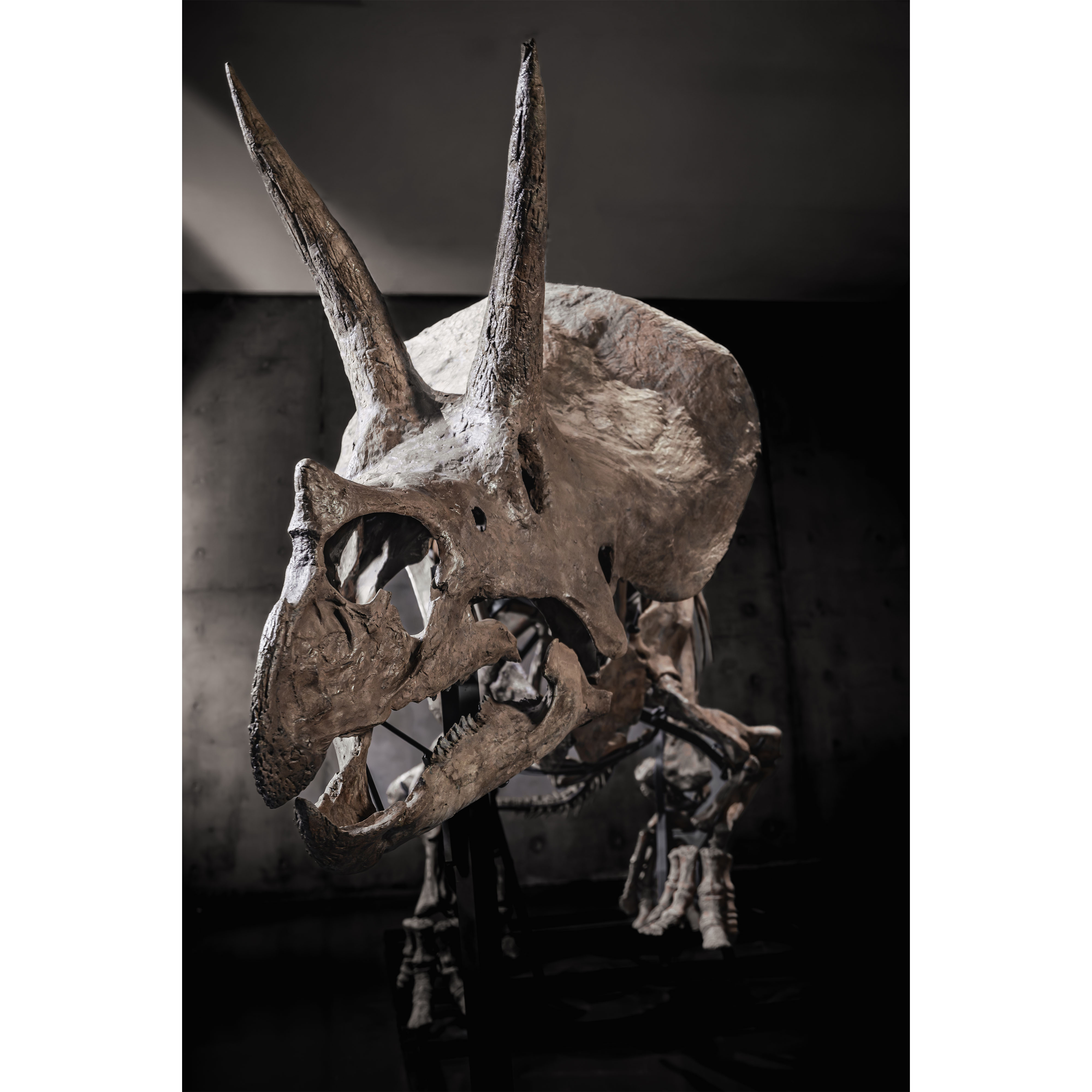
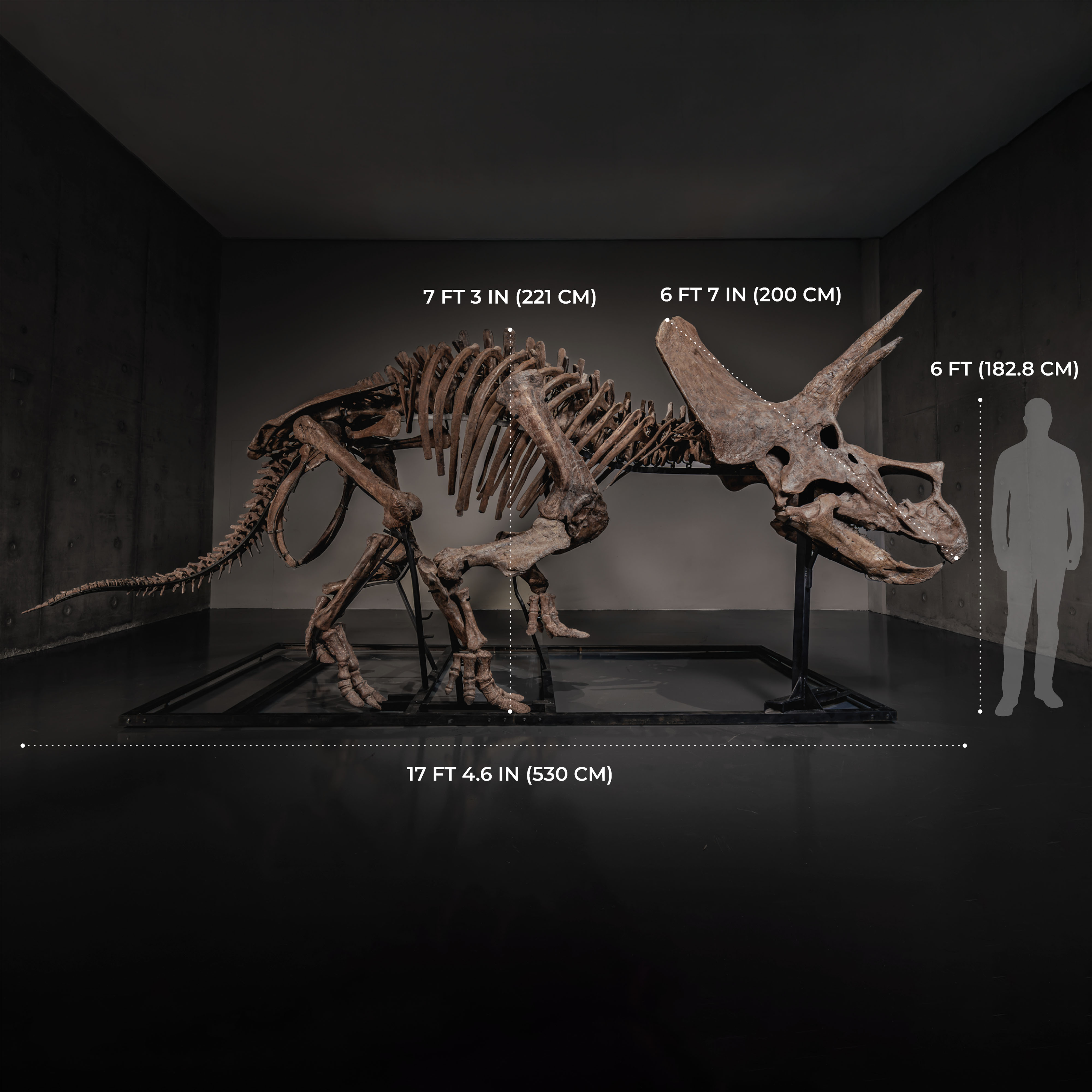
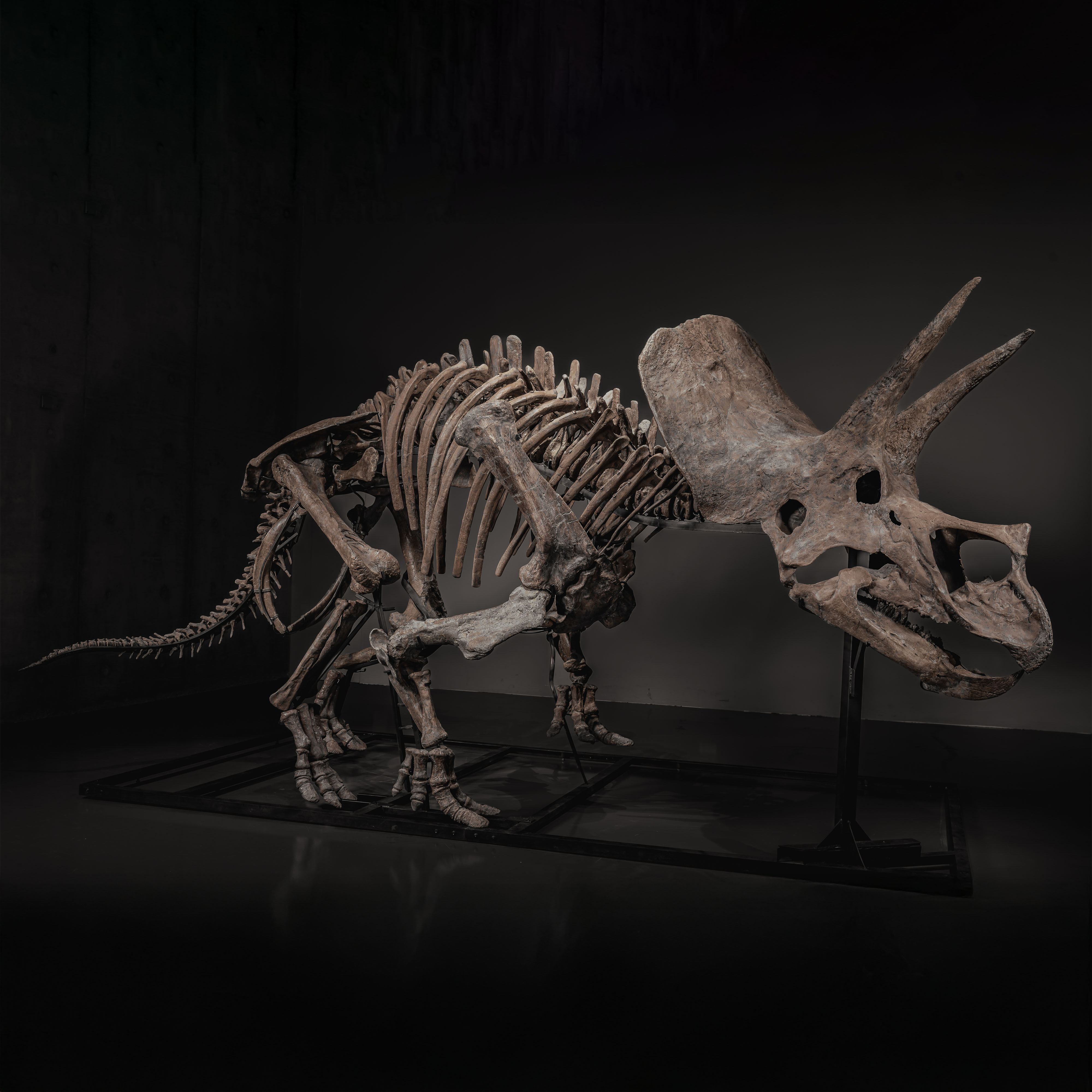
Trey – Sub-Adult Triceratops Skeleton
Estimate
USD $4,500,000 - 5,500,000
Closed
Mar 31, 2:02pm UTC
Formerly exhibited on long-term loan at the Wyoming Dinosaur Center; viewed by over one million visitors.
Explore the story behind this extraordinary fossil.
Overview
Studied and contextualized by paleontology expert Andre LuJan, Trey is an exceptional Triceratops specimen: a museum-exhibited skeleton with documented provenance, preparation history, and sustained public visibility. Few dinosaurs are as instantly recognizable as Triceratops—first described by O.C. Marsh in 1889 and anchored by the famed holotype YPM 1820 illustrated in 1896—and few specimens combine scholarship, exhibition history, and cultural resonance at this level.
Excavated from the Lance Formation and dating to approximately 68–66 million years ago (Maastrichtian, Late Cretaceous), Trey lived on Laramidia—an island continent along the western edge of North America, corresponding to much of today’s western United States—where he shared his environment with hadrosaurs and Tyrannosaurus rex.
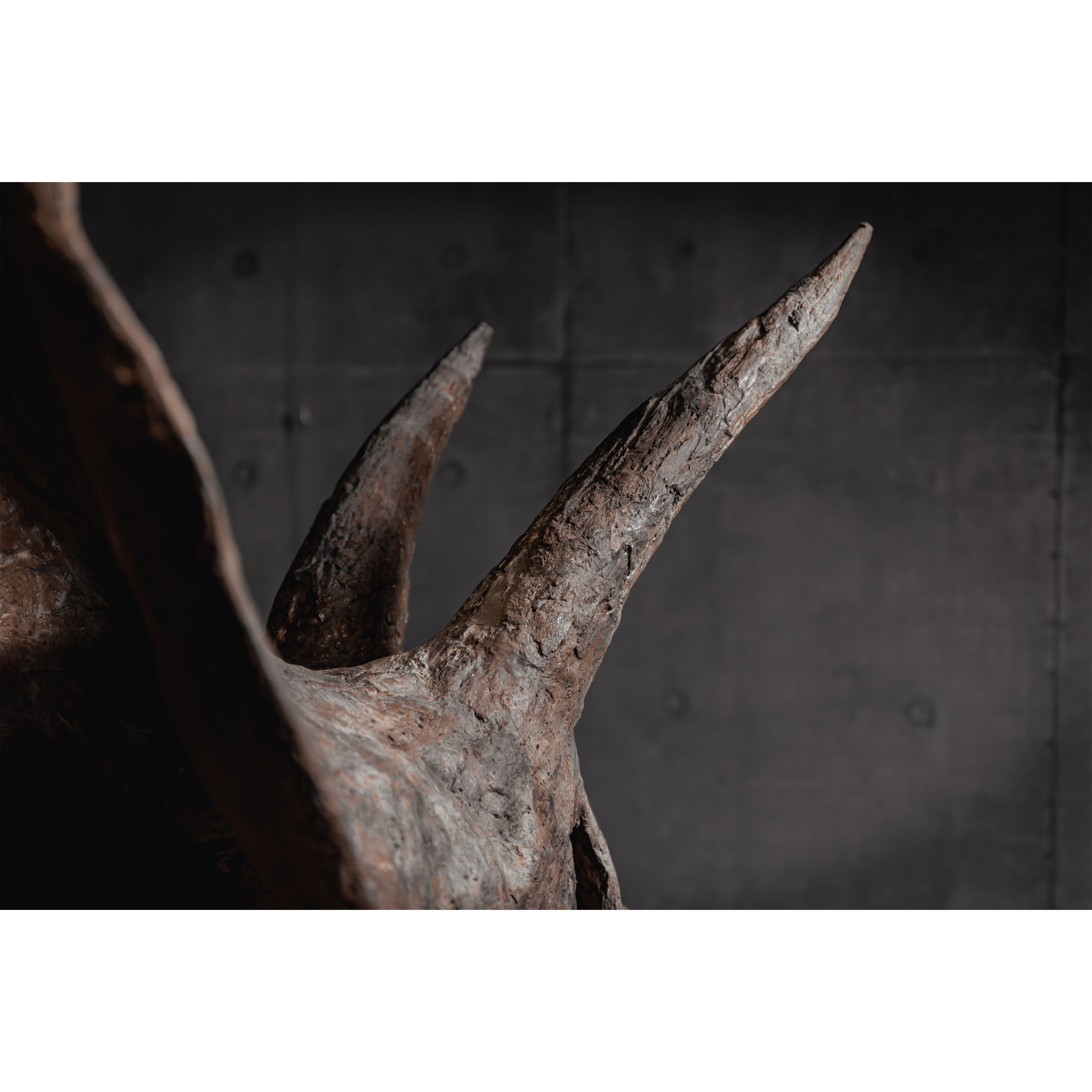
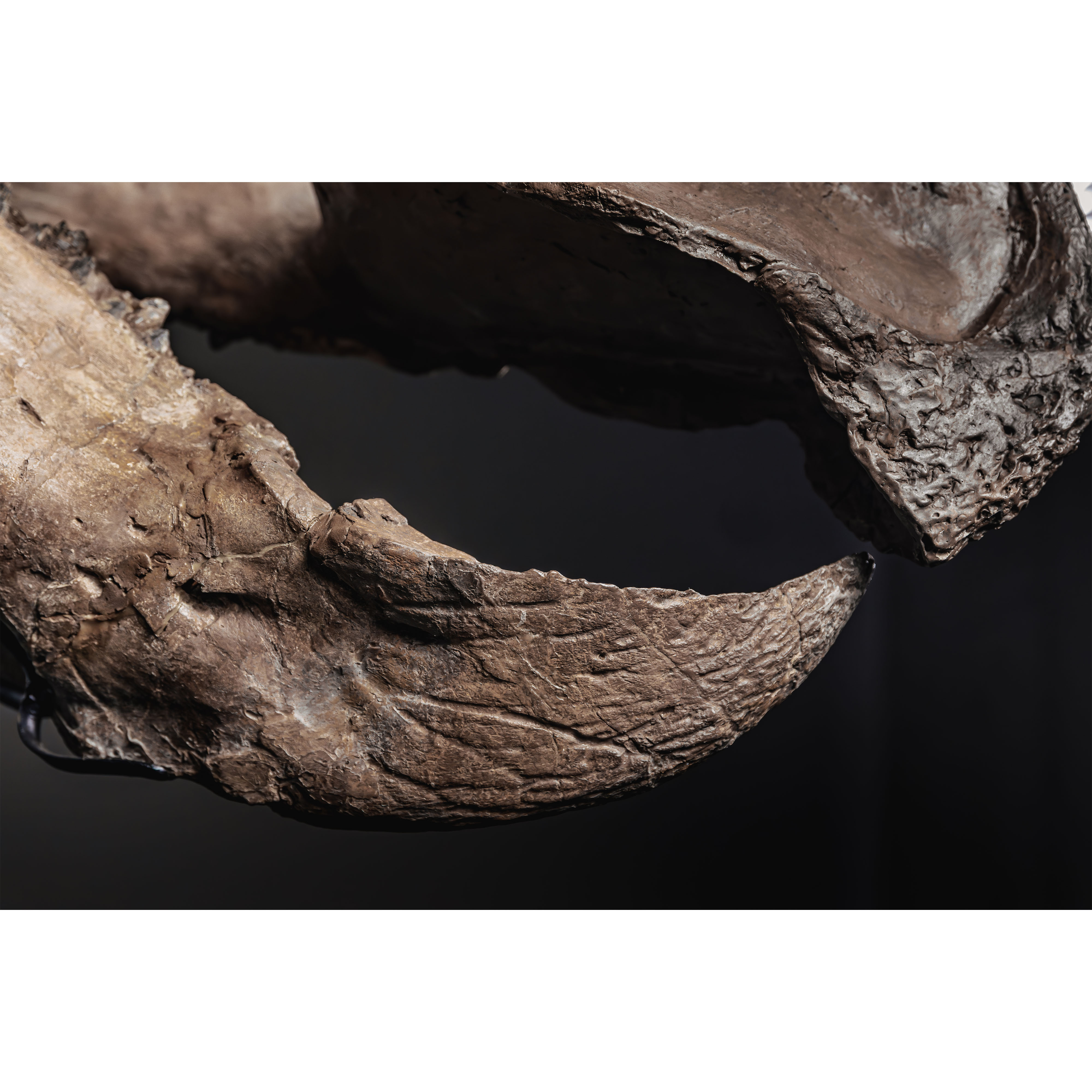
With its parrot-like beak, broad frill, and forward-facing horns, Triceratops is one of the most distinctive and intensively studied ceratopsians. The genus name, meaning “three-horned face,” reflects the cranial architecture that has made Triceratops instantly recognizable across science and popular culture alike.
Provenance and Discovery
Trey was discovered in 1993 near Lusk, Wyoming, by Lee Campbell in partnership with Allen Graffham of Geological Enterprises, Inc. Widely recognized within commercial paleontology for his impact on research and museum collections, Graffham is often compared to earlier major fossil hunters such as Charles H. Sternberg. He is credited with the discovery of more than 50 new species—alongside several new genera and even an entirely new family of invertebrate fossils in the United States—an extraordinary contribution in the modern era. His work is associated with notable finds including Acrocanthosaurus atokensis material from McCurtain County, Oklahoma, and “Tank” the Denversaurus, also from Wyoming’s Lance Formation.
Trey’s discovery belongs to the formative period of modern commercial paleontology sometimes referred to as the “Bone Rush,” and the specimen’s provenance and supporting archive preserve that human story alongside the scientific record—linking deep time to the discipline, ambition, and documentation that brought it back into view.
Preparation and Exhibition History
Following excavation, Trey was shipped to Germany in 1993 for meticulous preparation, restoration, and mounting, before returning to the United States as the centerpiece of the Wyoming Dinosaur Center’s grand opening on July 1, 1995. Thereafter, Trey remained on continuous public exhibition for nearly three decades and was viewed by over one million visitors—an exceptional public record for any privately owned dinosaur specimen.
Since its inception, the Wyoming Dinosaur Center has built what it describes as one of the largest and most distinctive fossil collections in the world, and Trey’s long-term loan helped define the institution’s early identity and ambition. Trey was exhibited among widely celebrated specimens, including the “Thermopolis Specimen” of Archaeopteryx, noted by the Wyoming Dinosaur Center for preserving the best skull and feet among the Archaeopteryx specimens known at the time.
Age Analysis
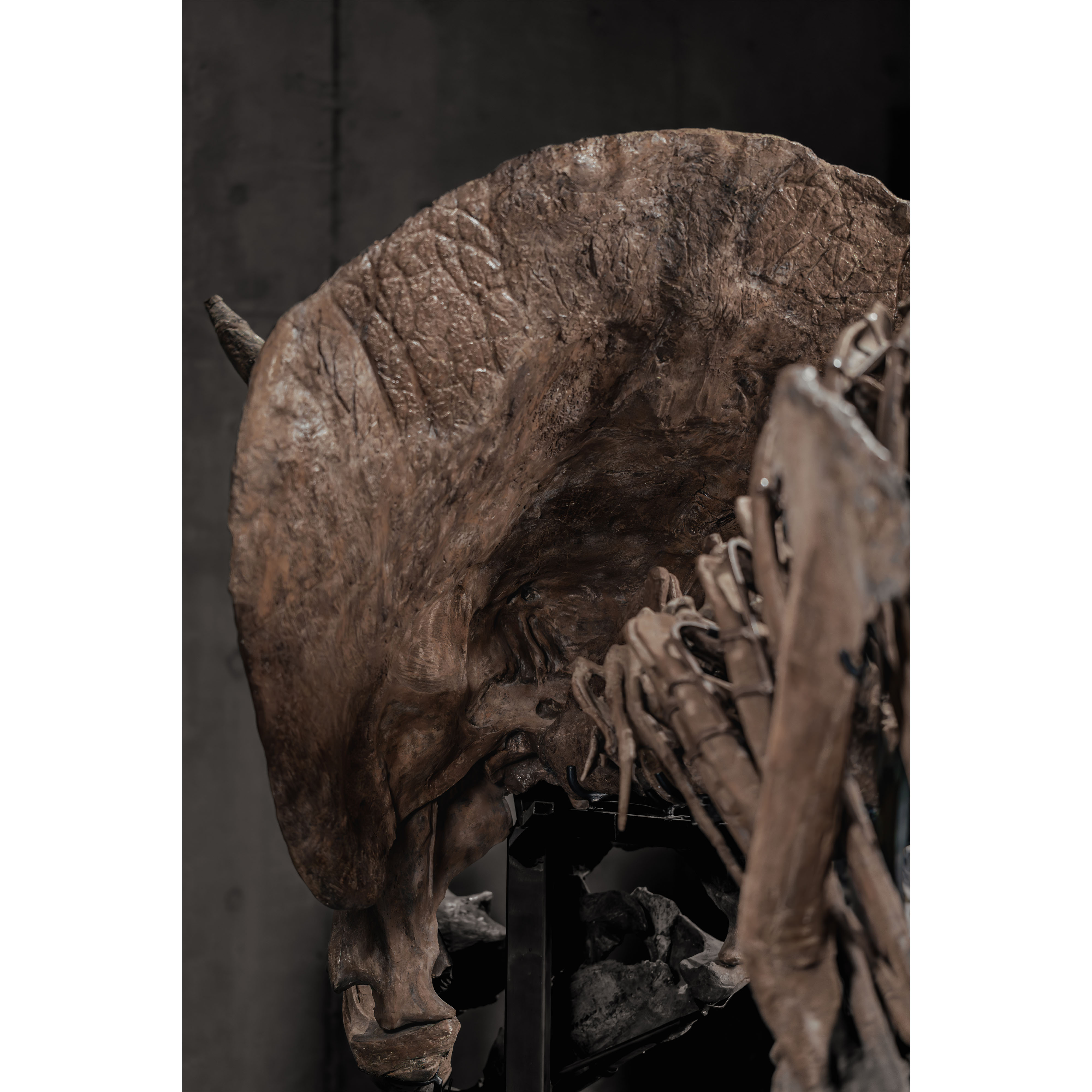
Specialist assessment supports Trey as a sub-adult to young adult individual. Dr. Frederic Lacombat noted: “The individual is a sub adult, the epoccipital bones that ornament the top of the frill are not present or fused yet due to its young age.” Andre LuJan added: “An examination of the skull and axial skeleton supports that this Triceratops is a young adult with plenty of room to grow.”
Completeness and Condition
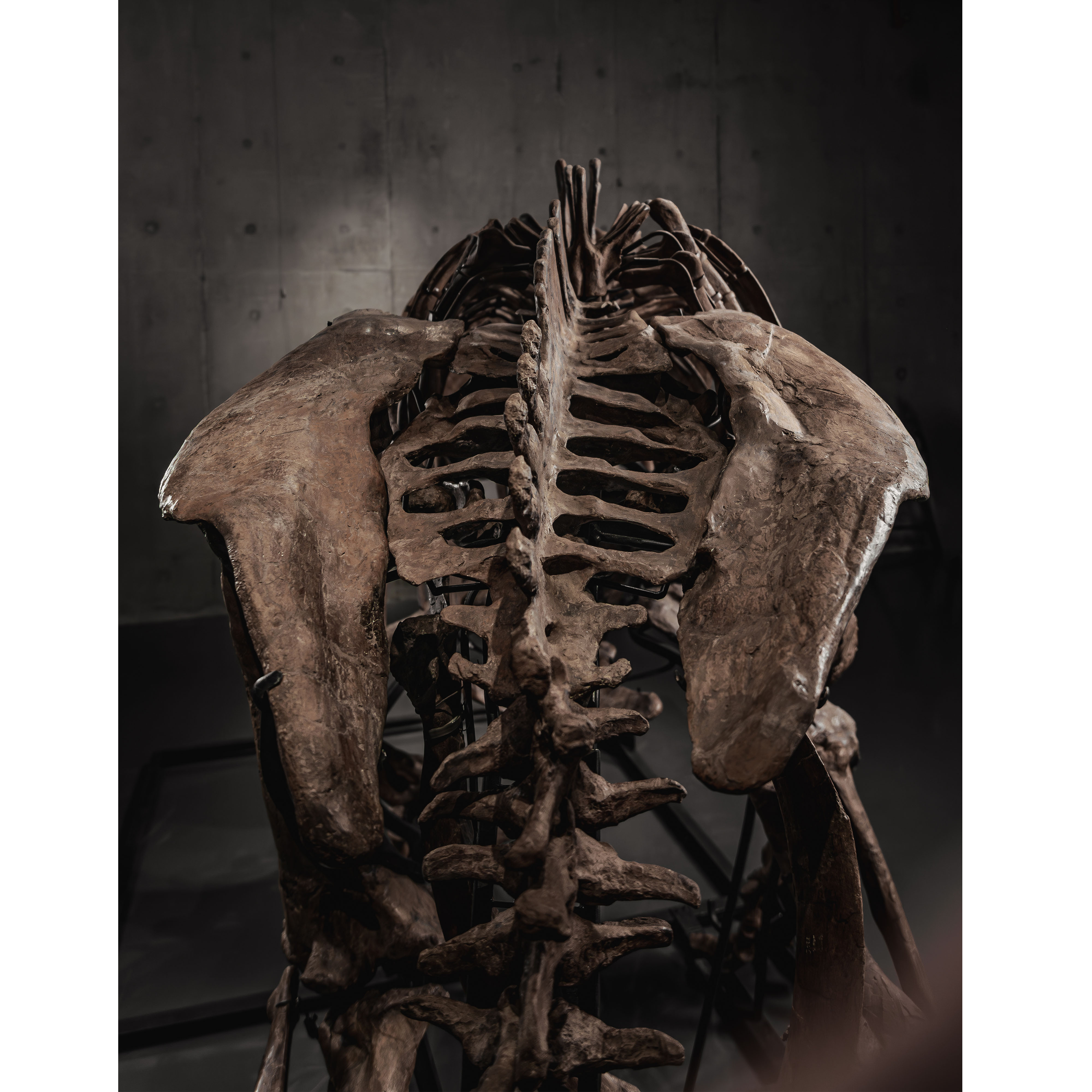
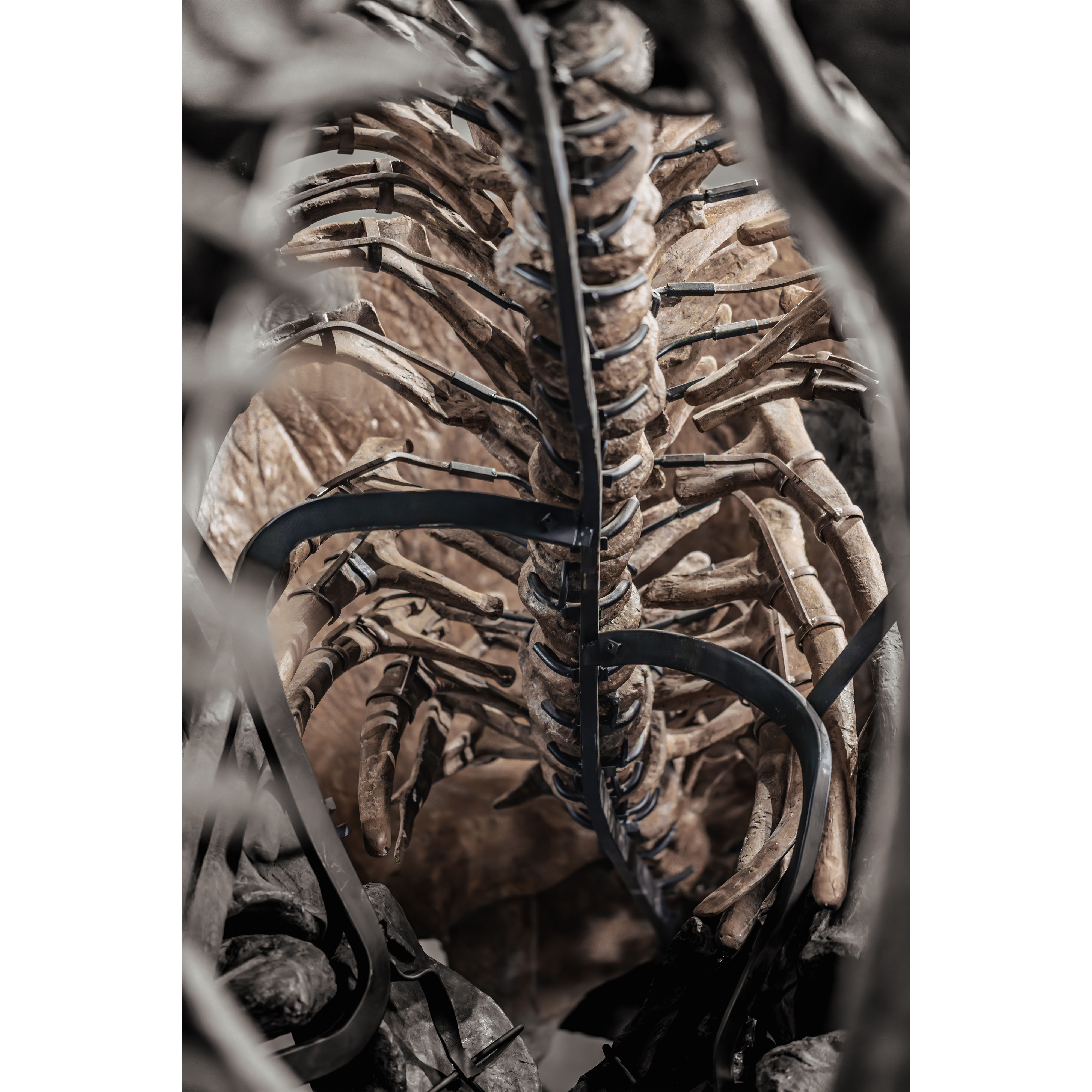
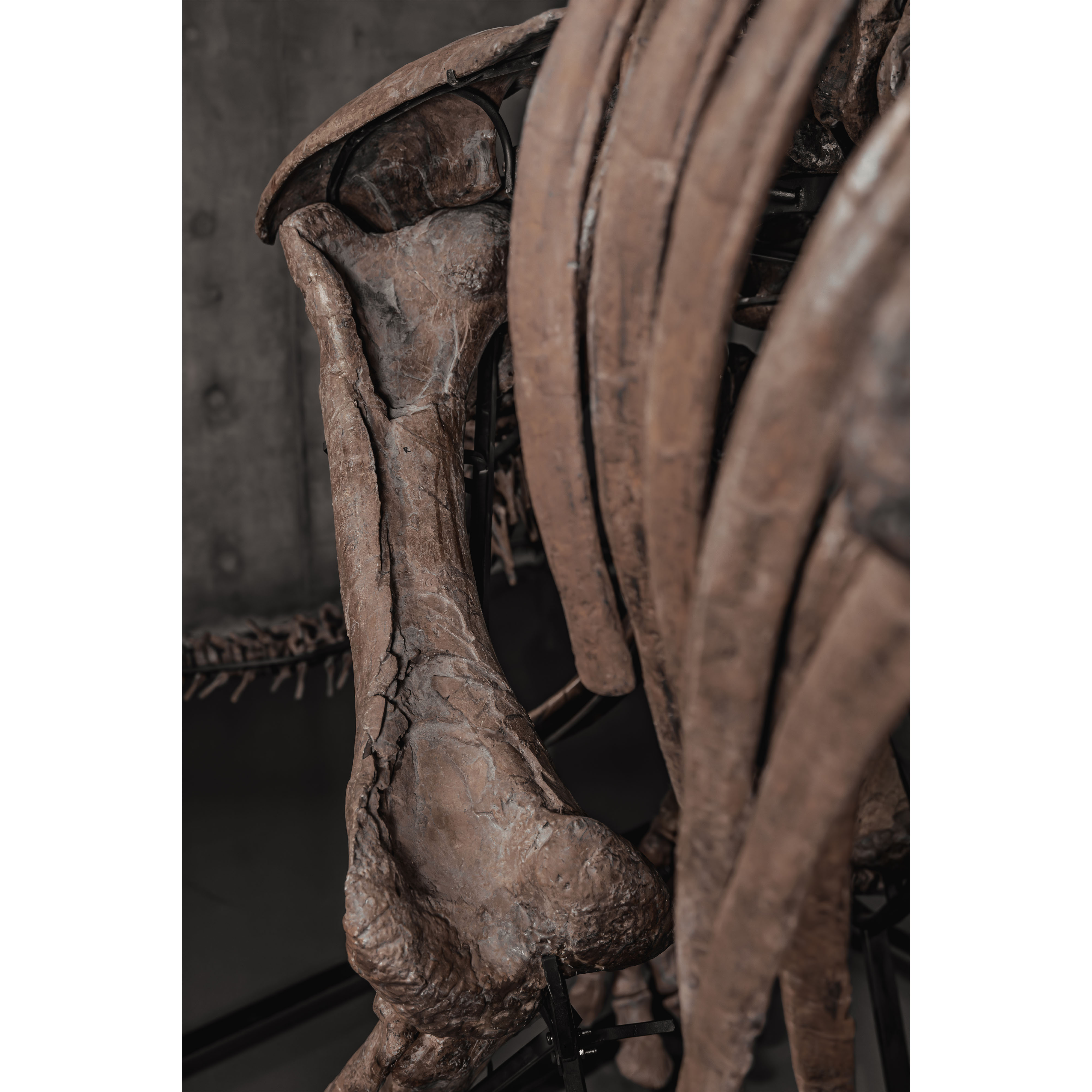
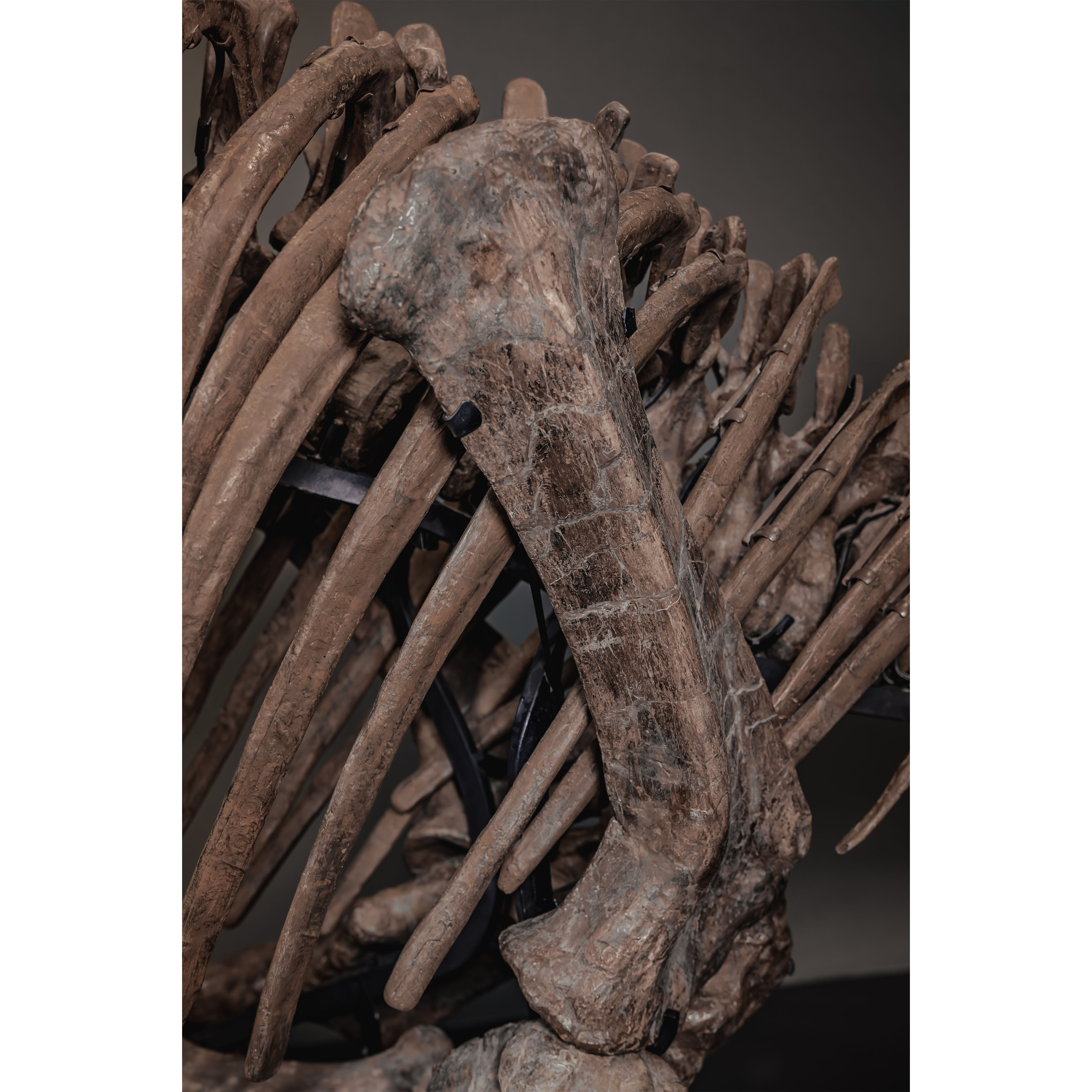
Trey’s skeleton is largely complete in major and diagnostic elements and by bone mass Trey’s completeness exceeds 70% original fossil material. Smaller bones that are more prone to loss through scavenging, erosion, or dispersal—such as certain ribs and delicate manus and pes elements—are absent, a common pattern in the fossil record and consistent with natural taphonomic processes.
Scientific Significance
From a scientific perspective, Trey contributes meaningful data to the study of Triceratops morphology, skeletal articulation, and preservation within the Lance Formation. Because he is sub-adult, Trey preserves anatomical information from a stage that is often underrepresented—when key features are still developing and proportions are still shifting—making him especially valuable for comparative work on chasmosaurine growth and form. His stability, documentation, and long-term accessibility have enabled sustained comparative study, positioning the specimen as an important reference point for understanding chasmosaurine anatomy and Late Cretaceous ecosystems.
Collecting Significance
Opportunities to acquire dinosaur skeletons of this caliber are exceptionally rare, with most significant specimens remaining permanently in institutional collections. Remarkably, Trey is the only dinosaur procured through Allen Graffham to come to market in the past two decades and represents the last privately owned specimen from his discoveries; all others now reside in museum collections worldwide. This sale therefore presents a singular opportunity for collectors and institutions to assume stewardship of a culturally and scientifically significant specimen.
Aesthetic Assessment
Trey’s classical mounting style preserves an important chapter in the art of dinosaur display. The dynamic pose captures the specimen’s presence, while mineral replacement over millions of years—groundwater and iron-rich minerals gradually replacing organic material—has painted the skeleton in warm earth tones, creating natural surface complexity on a once-living structure. Trey’s sub-adult scale remains visually commanding while adaptable for display in a wide range of public or private spaces.
Supporting Archive
Original historical documentation includes:
— the original sales contract
— the original fossil lease agreement with the landowner
— original photographs of Allen & Lee at the dig site in Lusk
— original photographs of fieldwork and finds from the Lusk lease, from the estate of Allen Graffham
To view a PDF dossier that includes these materials, please contact a specialist.
The Co-Museum
This sale supports Co-Museum, a cultural platform that brings community into dialogue with objects through storytelling-led drops and shared ownership. It also advances the education, preservation, and expands public access to the world’s most significant cultural assets through immersive experiences and community-powered models.


